Newfoundland: Icebergs, Puffins, and a Town Named Dildo
Most people I tell about this trip ask the same thing: why Newfoundland? It's a fair question. It isn't on the usual list. There are no big resorts, no famous skyline, no reason it shows up in your feed. That's exactly why my best friend Rowan and I went. He flew in from San Francisco, I picked him up in Boston, and we pointed my Subaru Crosstrek north with no hotel plan and a lot of American cheese and tortillas in the back. Ten days later we came home with thousands of photos, a puffin tattoo, and a long list of strangers who had been unreasonably nice to us. I went in June, which on this island can mean fog, sun, heat, and cold all in the same afternoon. Here's how it went.
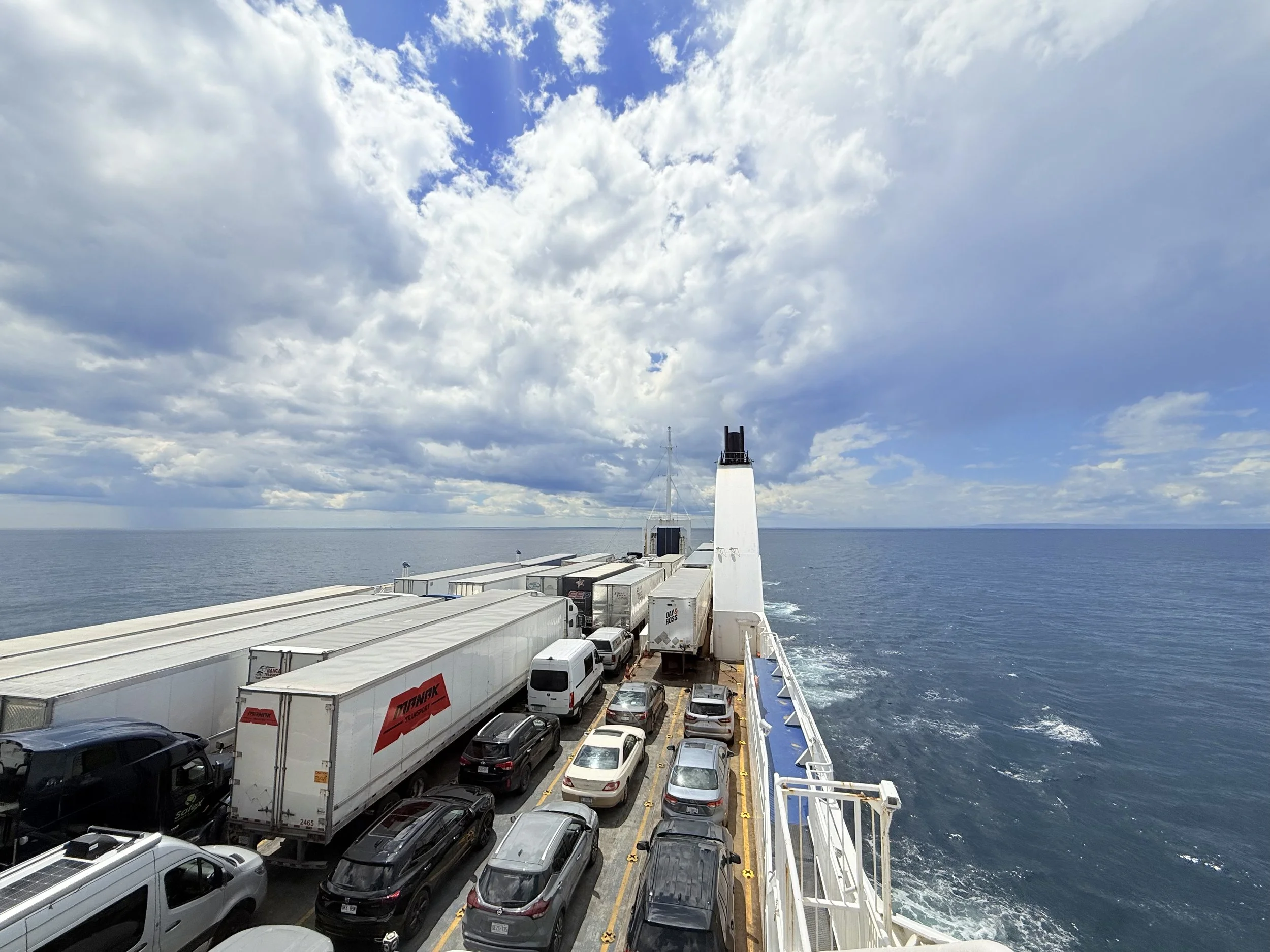
Just getting there is a commitment.
You can't drive straight to Newfoundland. First you have to get to the ferry, and from Boston that's about 12 to 13 hours of driving through Maine, New Brunswick, and Nova Scotia to a town called North Sydney. Then you put the car on a boat. We took the short crossing over, the quick route from North Sydney to Port aux Basques on the island's southwest corner. Standing on the deck watching Nova Scotia shrink behind you, with your car parked somewhere below and the Newfoundland coast slowly coming up out of the water ahead, is a genuinely great way to arrive somewhere. You're not flying in and grabbing a rental. You're crossing to it. That distance is a big part of why so few people make the trip, and a big part of why it's worth it.
We rolled off the ferry and drove up the west coast toward Gros Morne, living out of the car and grabbing a night's sleep near Corner Brook before the real stuff started.
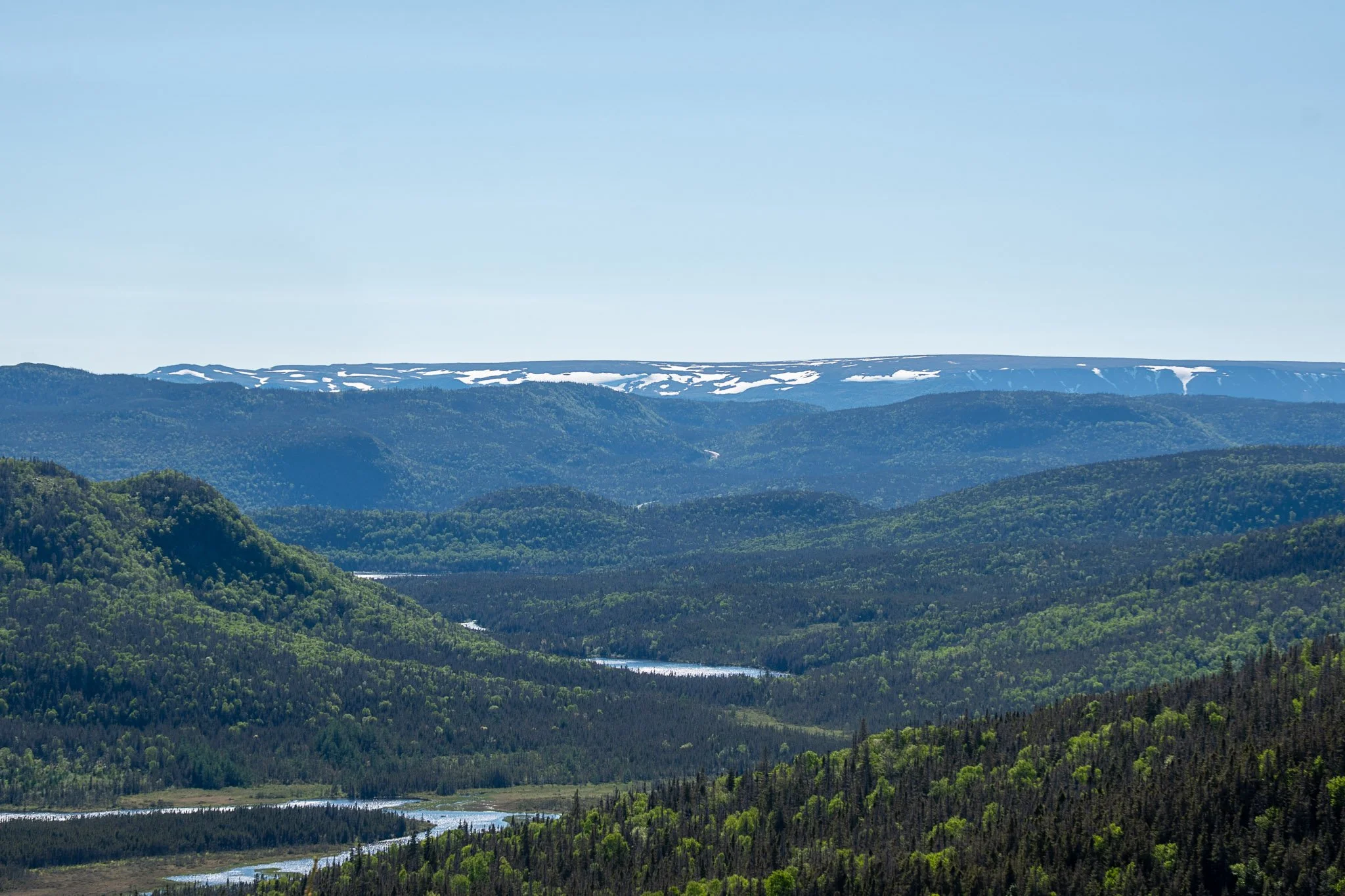
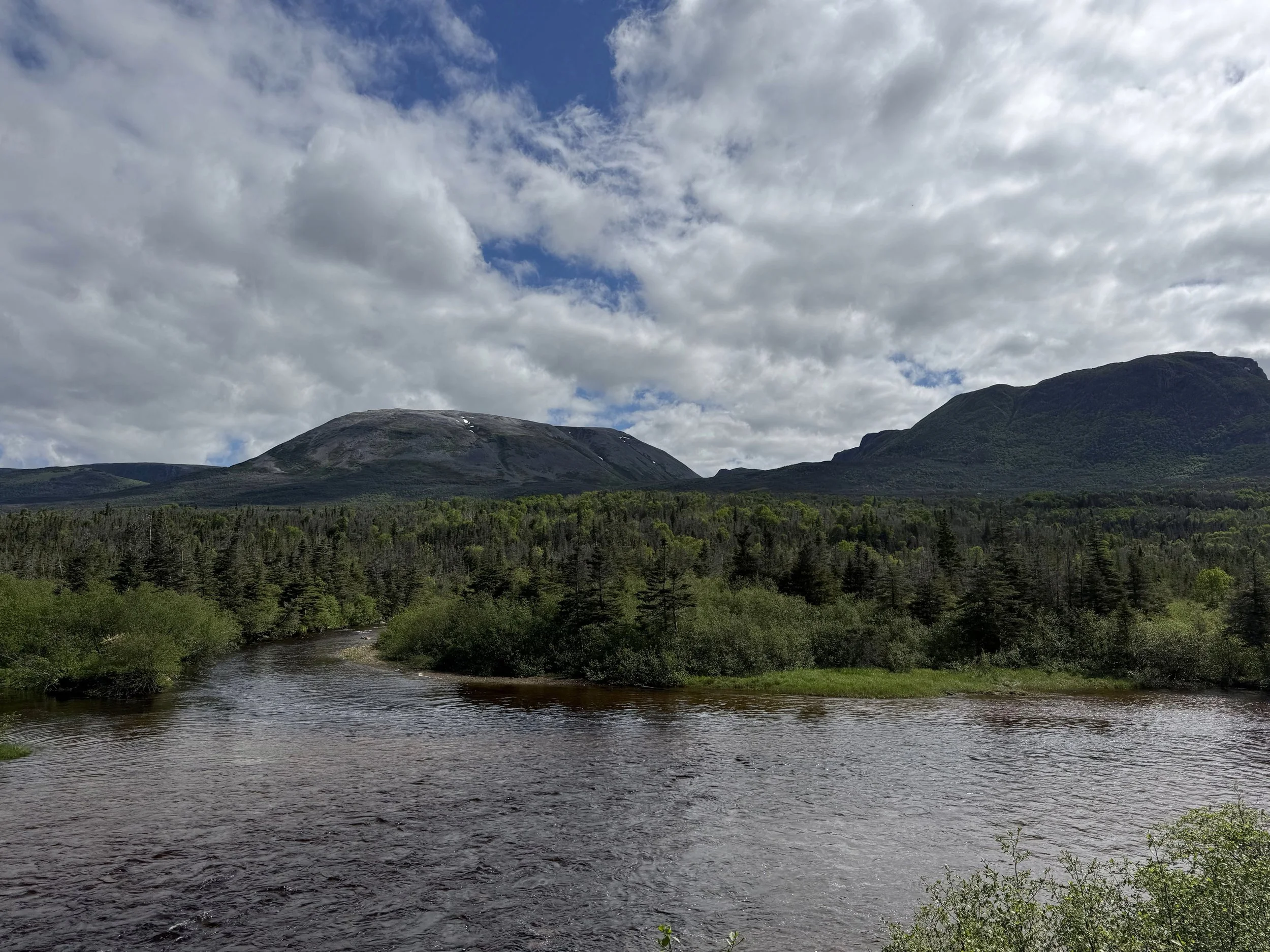
Gros Morne: a kind ranger and a piece of the Earth's mantle
We based out of Berry Hill Campground inside Gros Morne National Park, and I want to start here with the park ranger, because he set the tone for the whole island. He was one of the nicest people we met the entire trip. That kept happening in Newfoundland. People go out of their way for you before you've even asked.
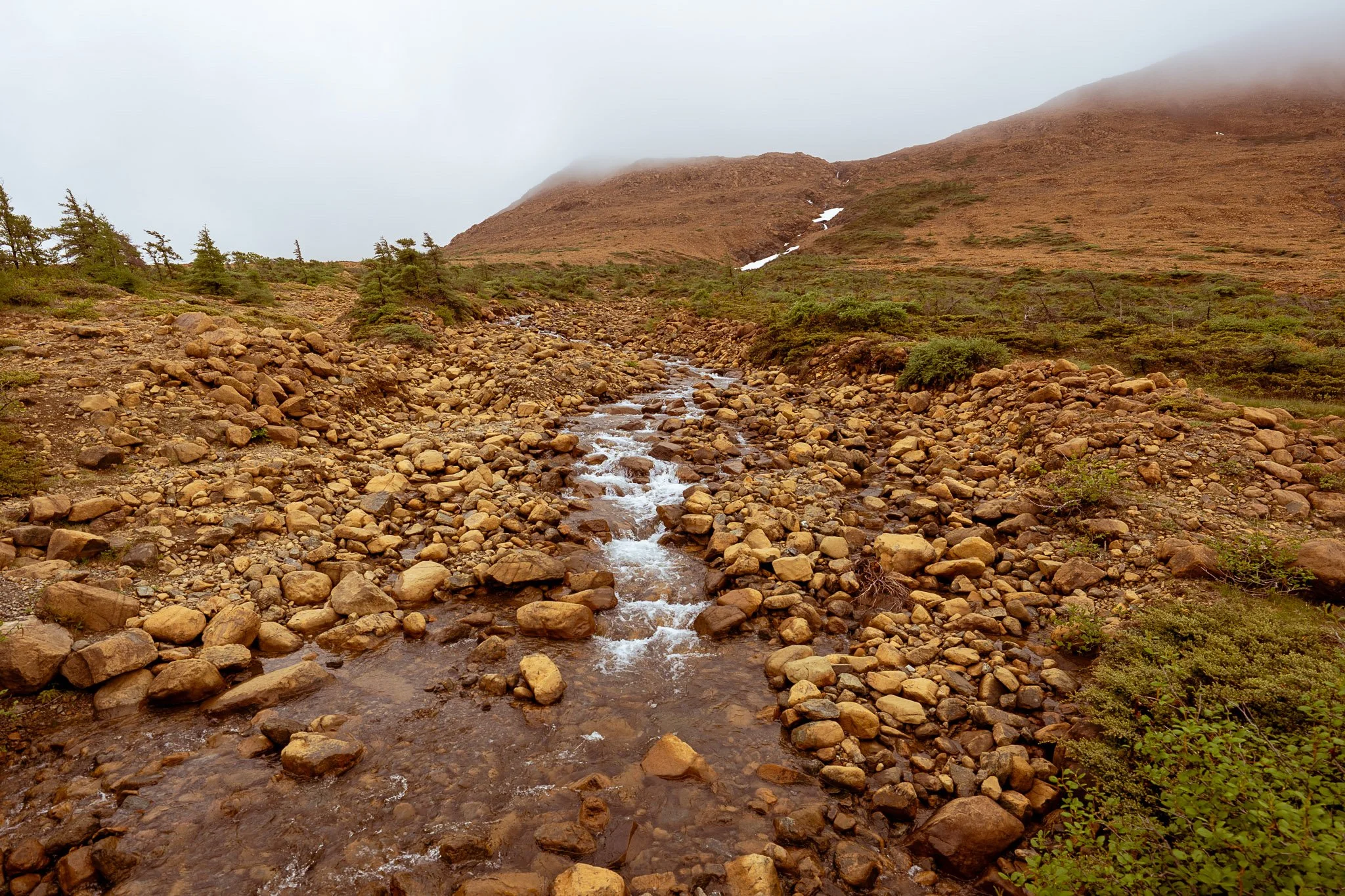
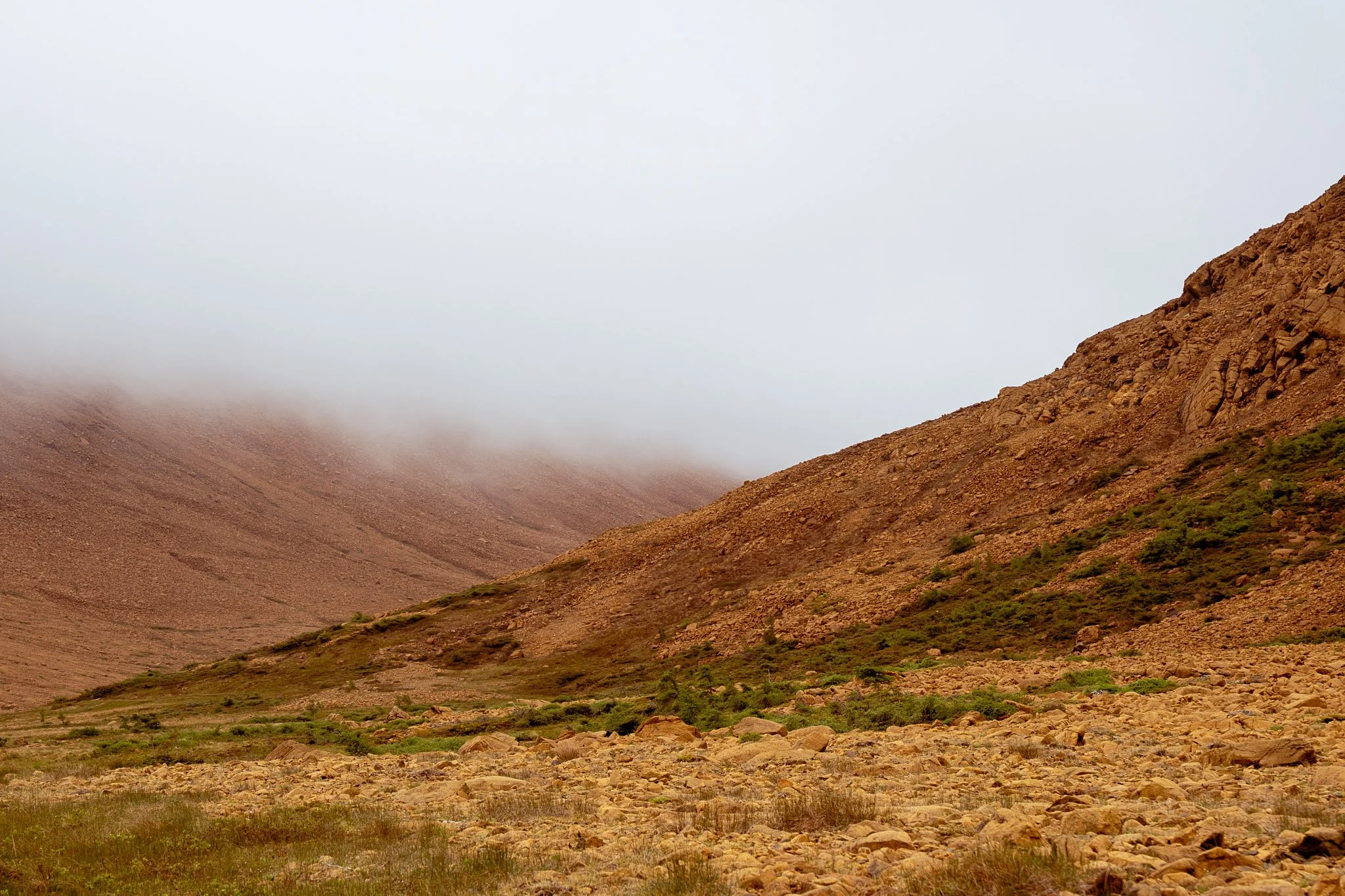
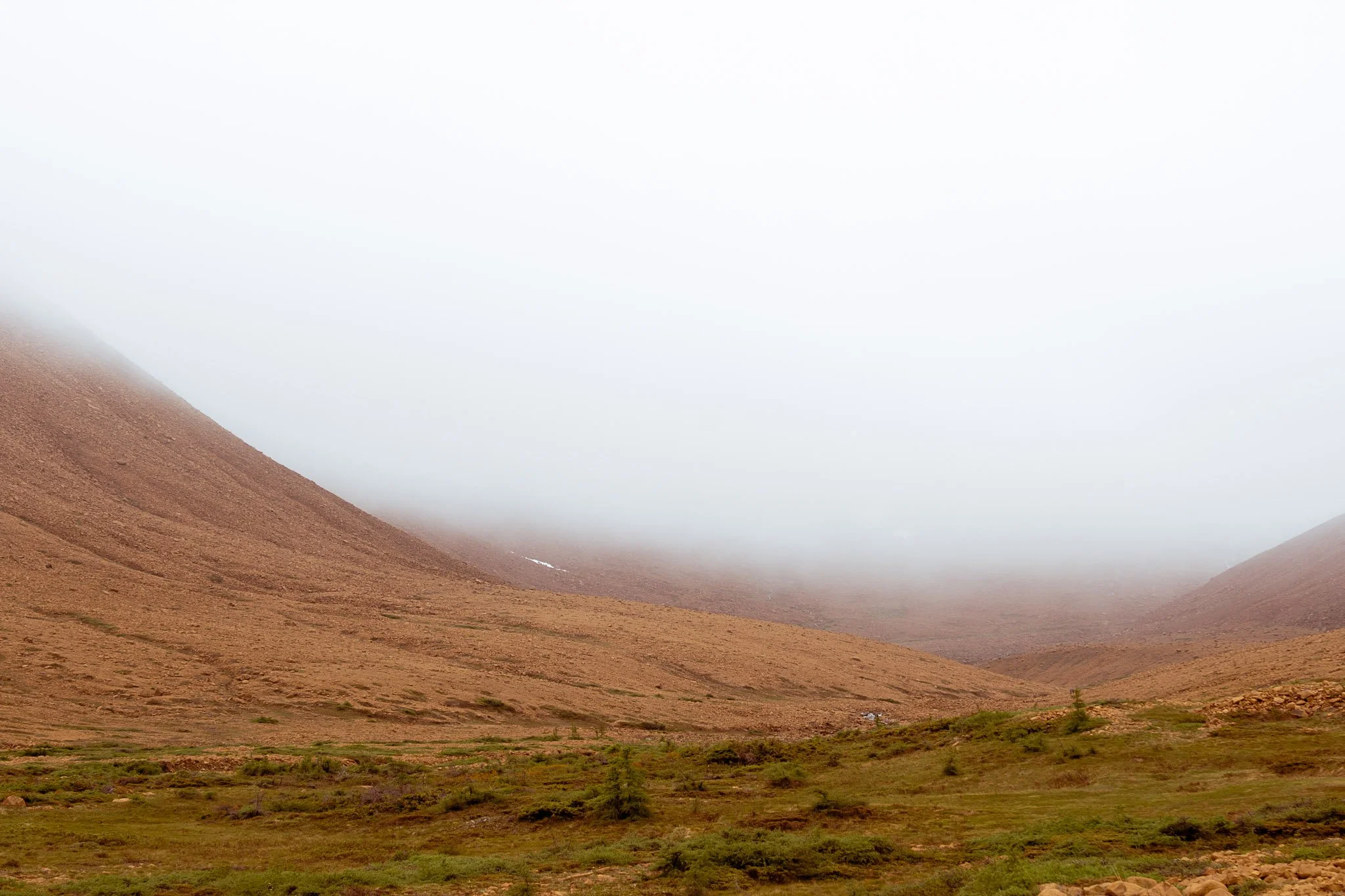
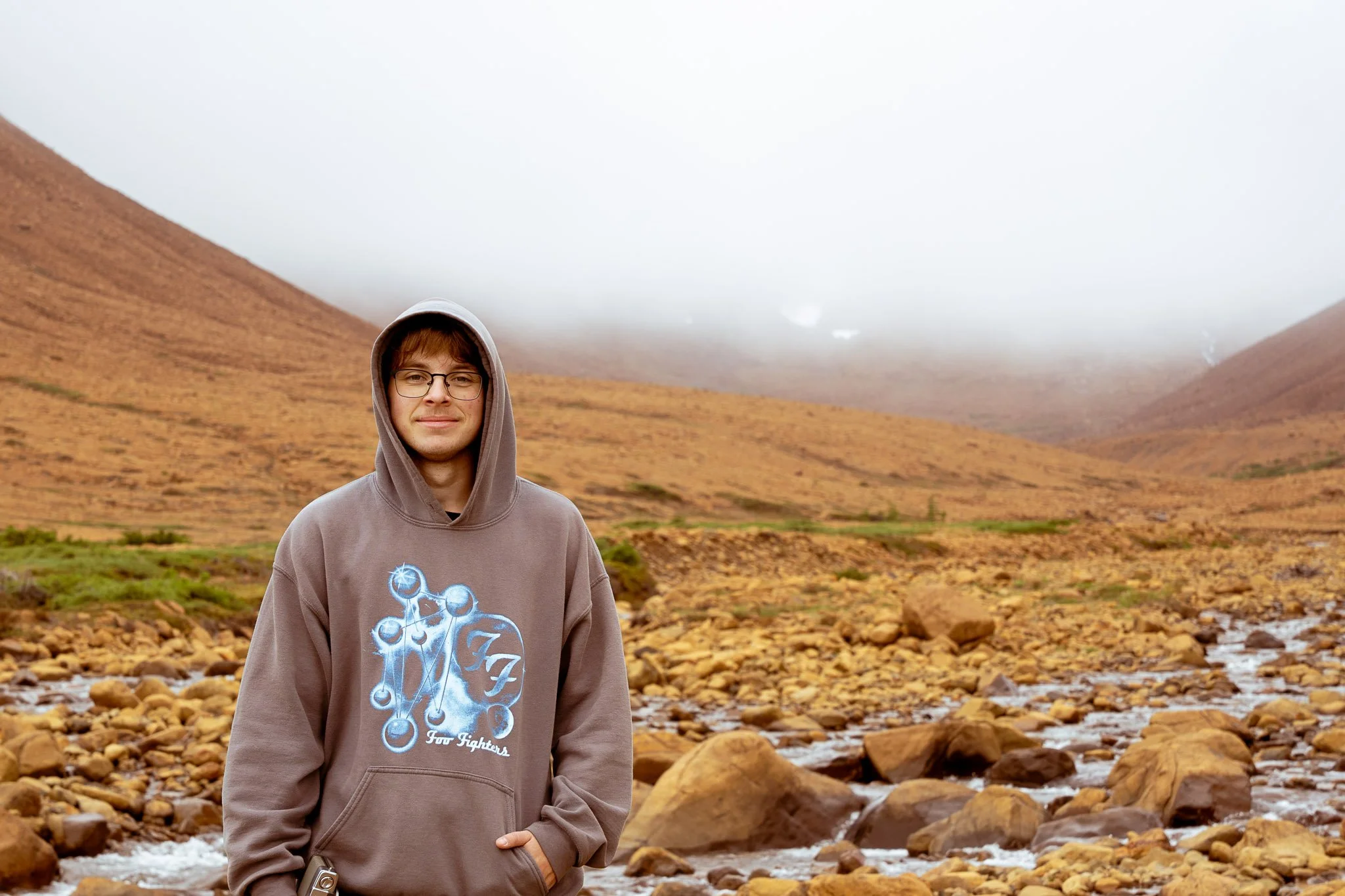
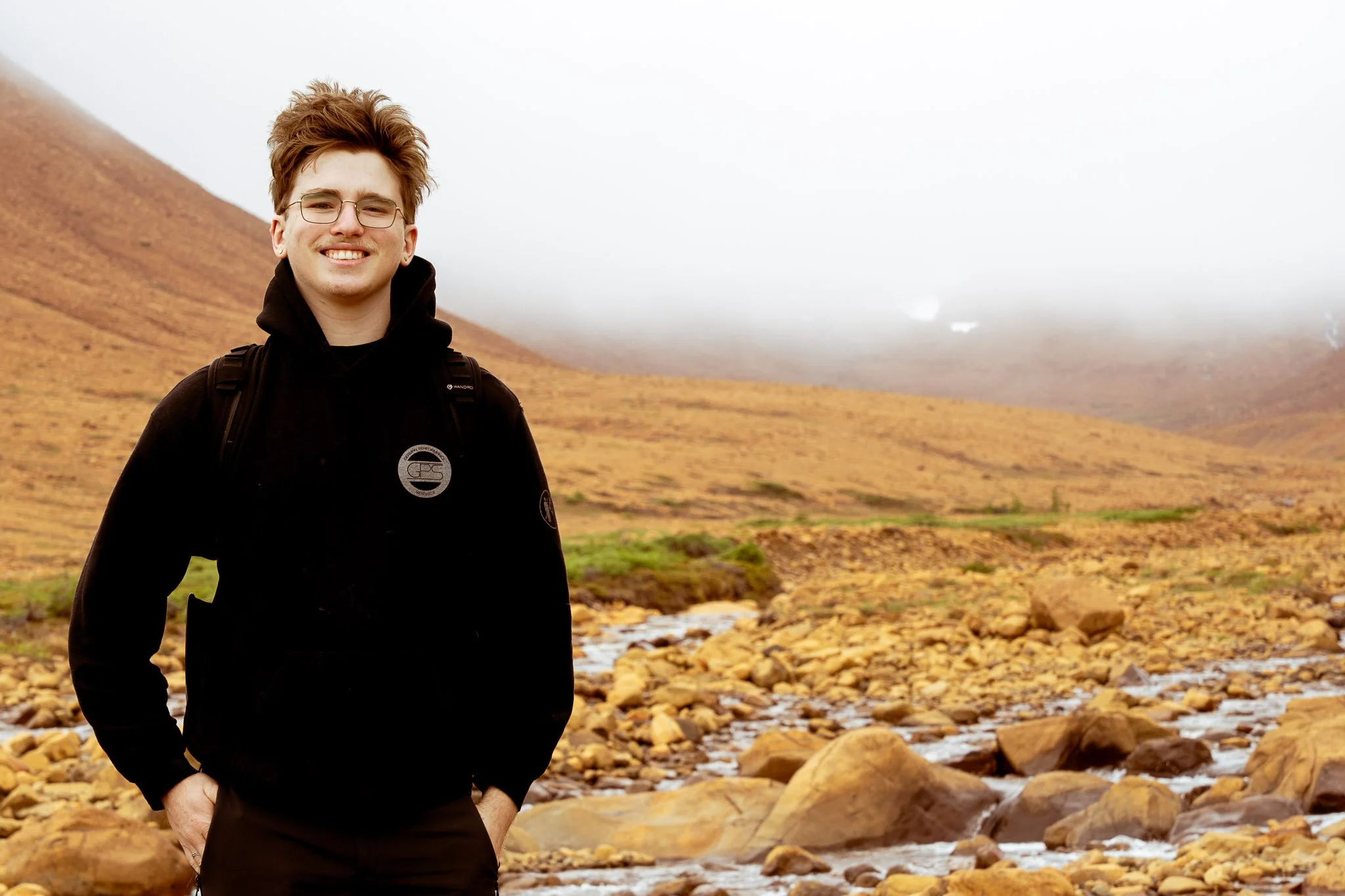
Gros Morne is the reason a lot of people come to this part of the island, and the Tablelands are why it's a UNESCO World Heritage Site. The whole plateau is a rust-orange stretch of barren rock with almost nothing growing on it, sitting right next to the green forested hills of the rest of the park. The contrast is so sharp it looks fake.
There's a real reason it looks alien. The rock is peridotite, and it's normally found deep inside the Earth, in the mantle. About 500 million years ago, colliding tectonic plates shoved this slab of mantle up to the surface, where it's been sitting ever since. The orange is the iron in the rock rusting. Almost nothing grows on it because the rock is basically toxic to plants. So when you walk the Tablelands trail, you're walking on a part of the planet that is almost never exposed.
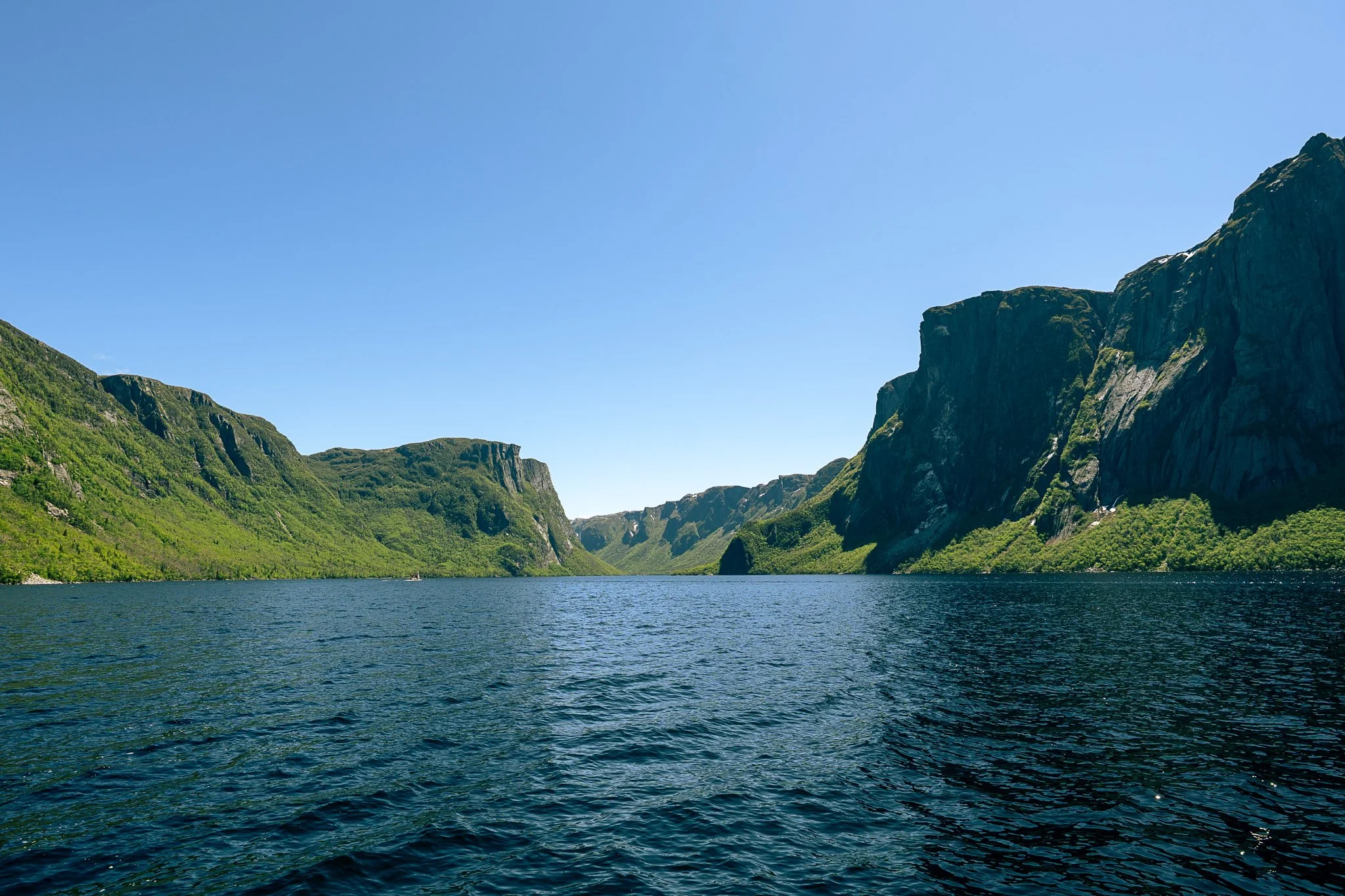
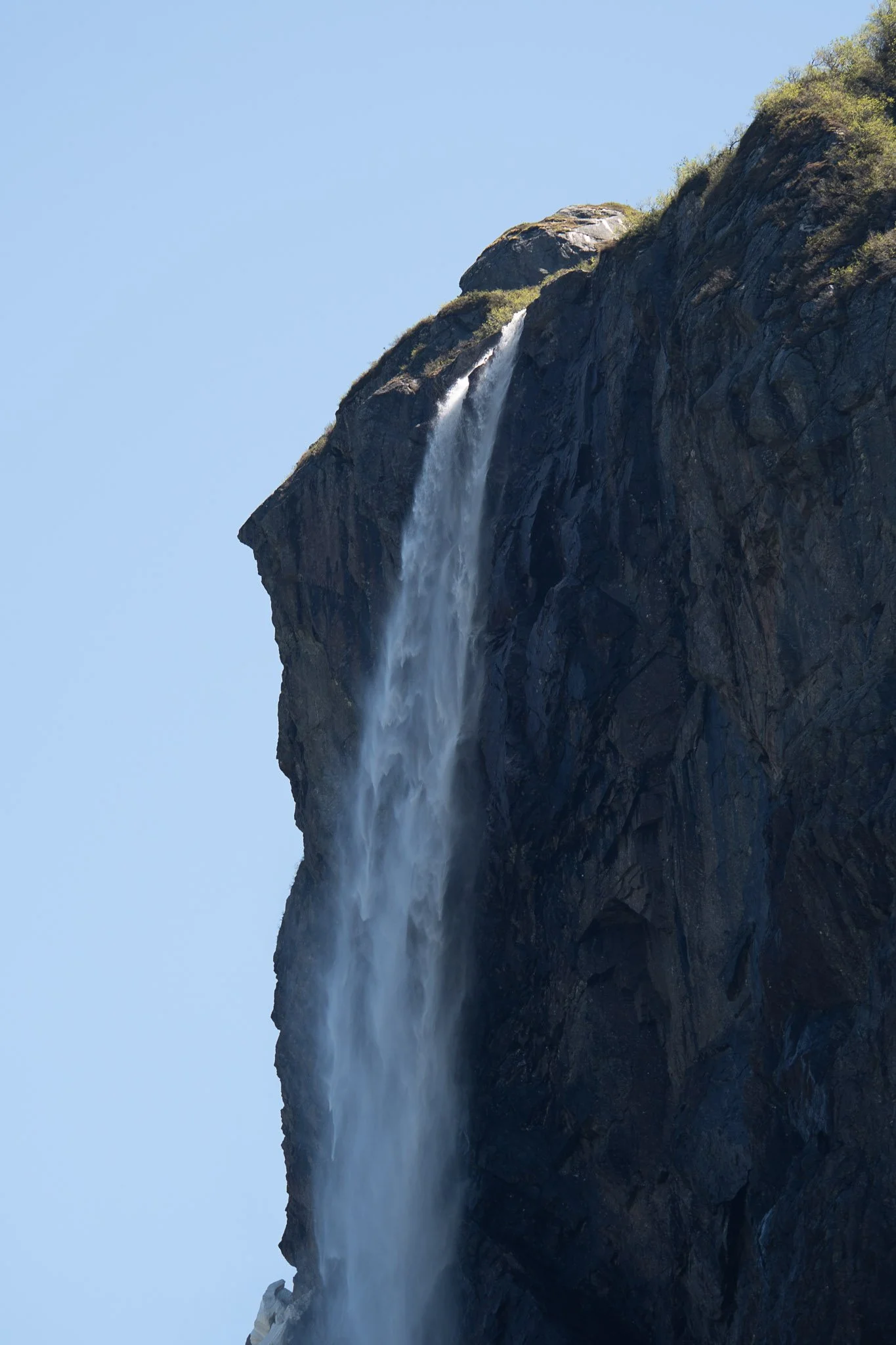
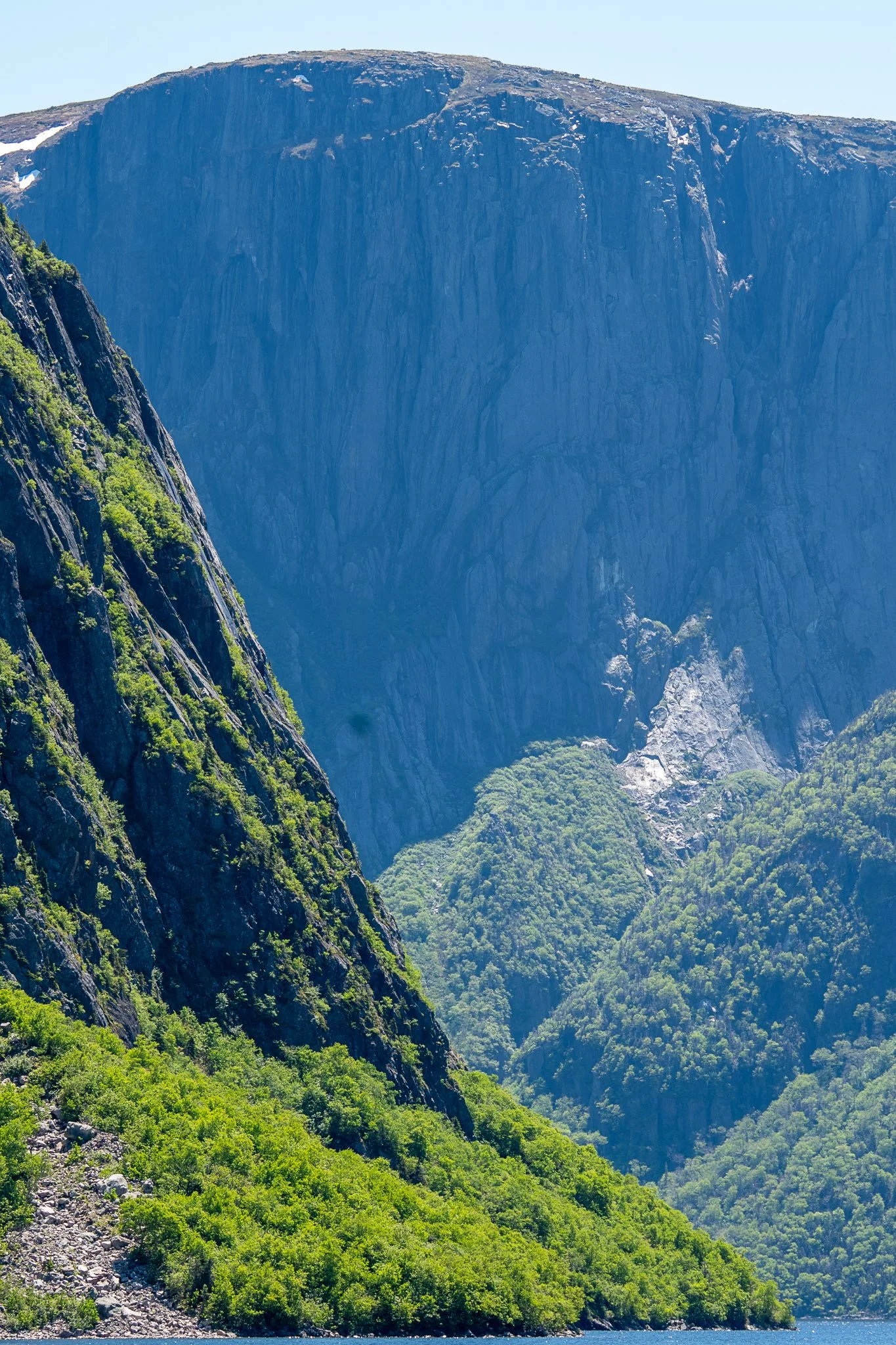
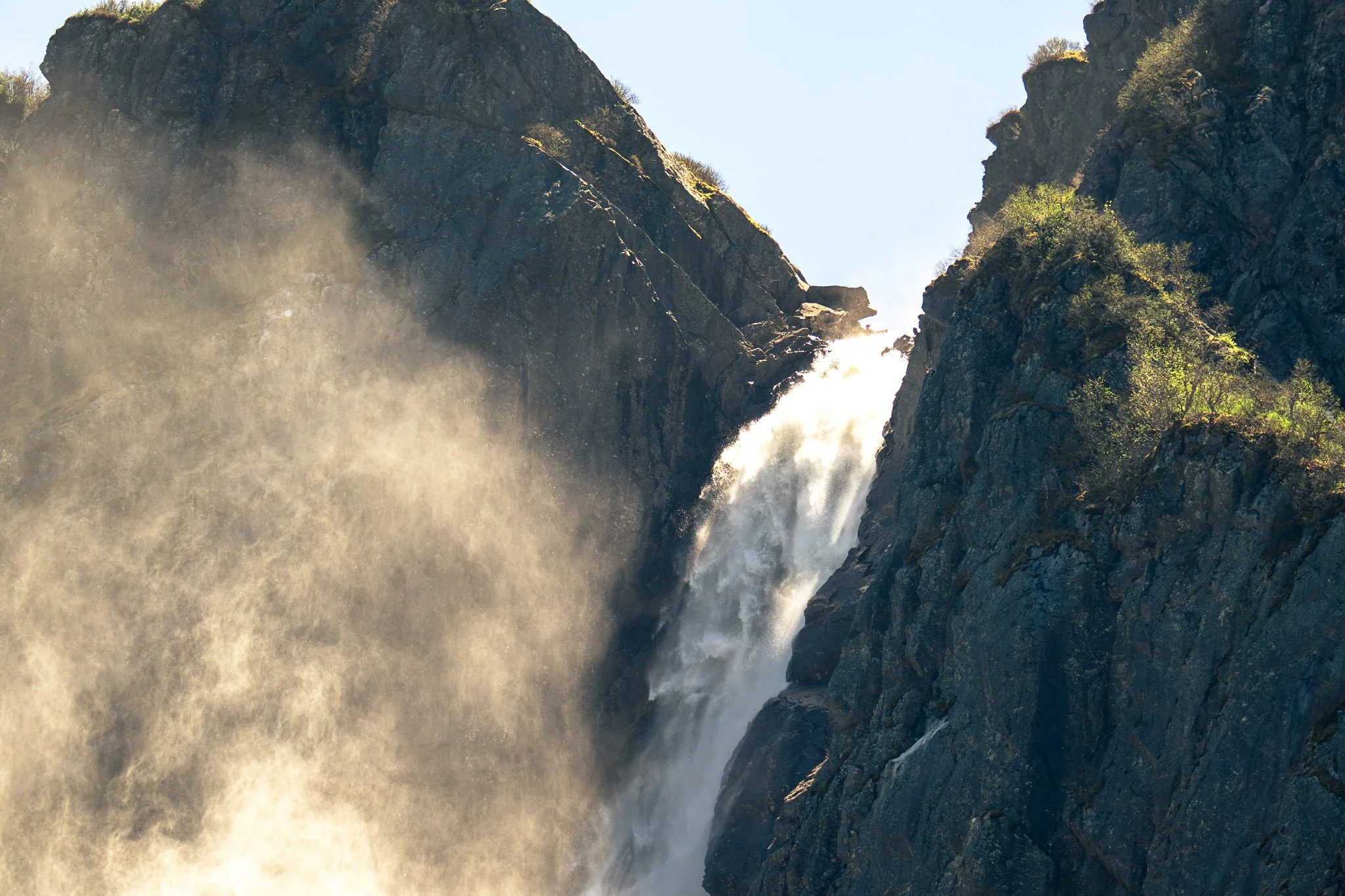
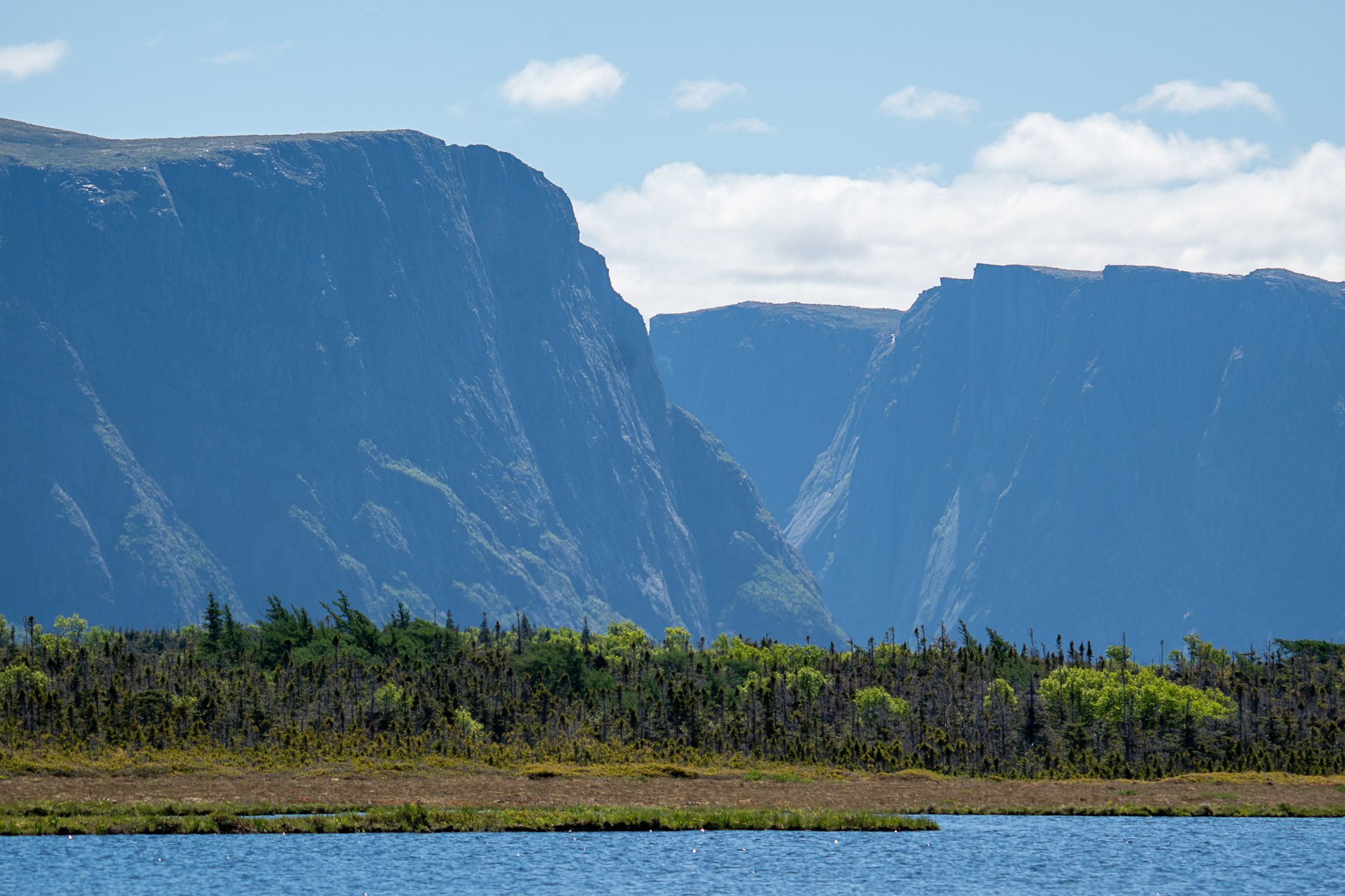
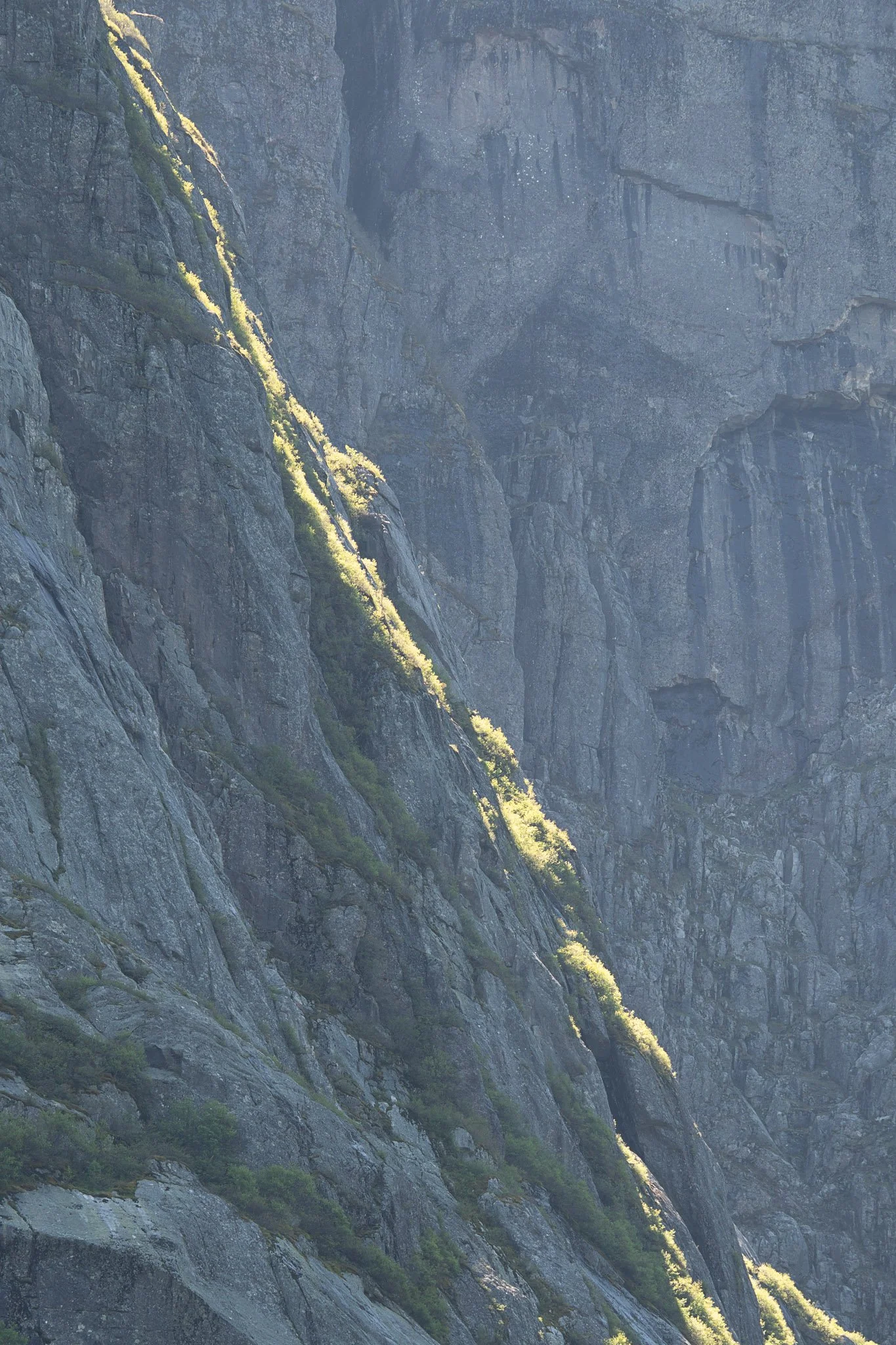
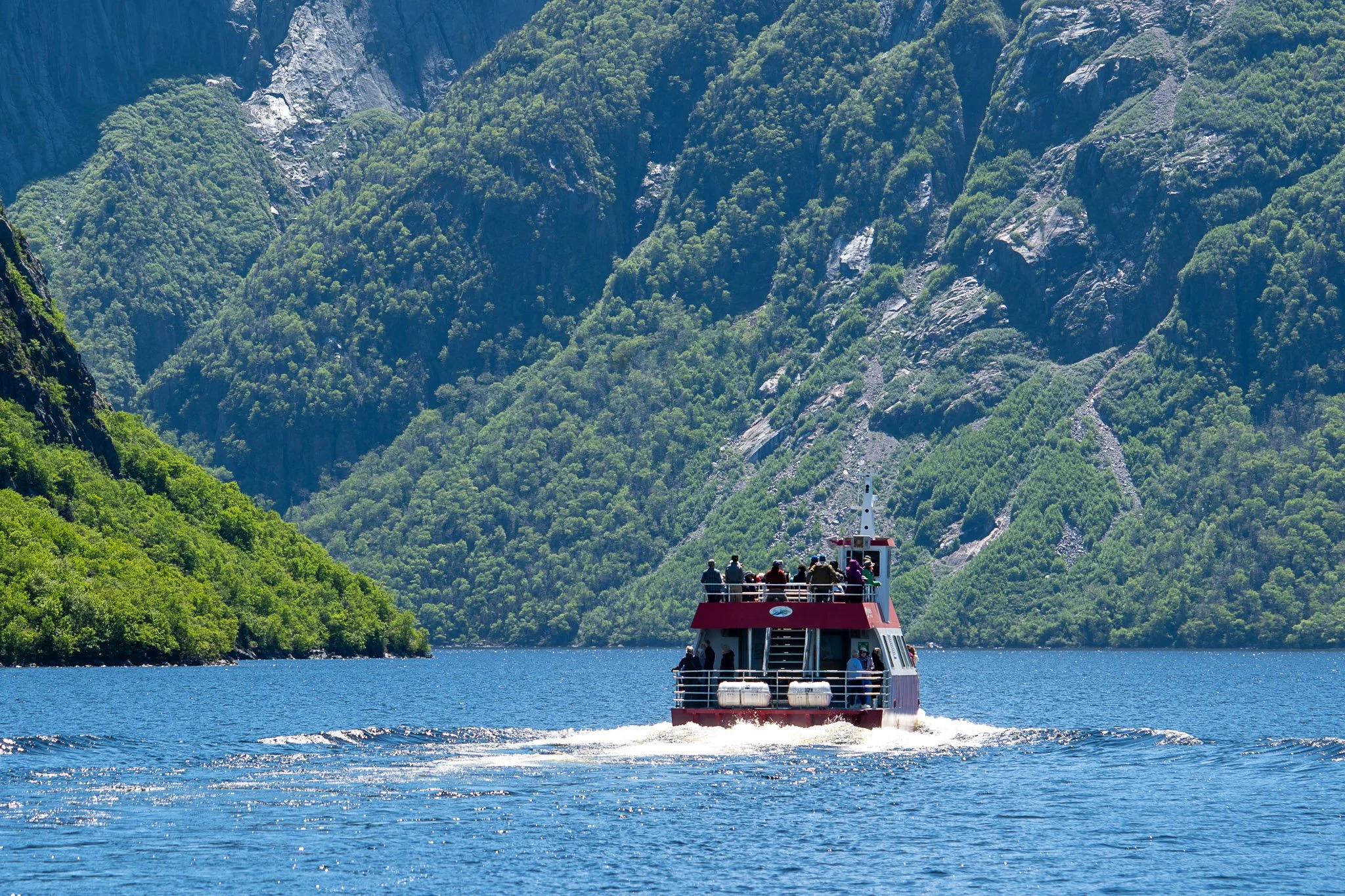
The other Gros Morne stop is Western Brook Pond. It's a freshwater fjord with cliffs rising about 600 meters straight out of the water. I'd always filed fjords under "Norway." Turns out Canada has them too. We honestly weren't going to do the boat tour, but the second we saw the thing we knew we had to get out on the water. book your tickets in advance. The boat was full. The only reason we got on was some serious sweet-talking and a couple of locals deciding to make it happen for us. I would not count on that working for you. Book ahead, then sit back while the cliffs close in over the boat and you try to make sense of the scale.
Twillingate and Iceberg Alley
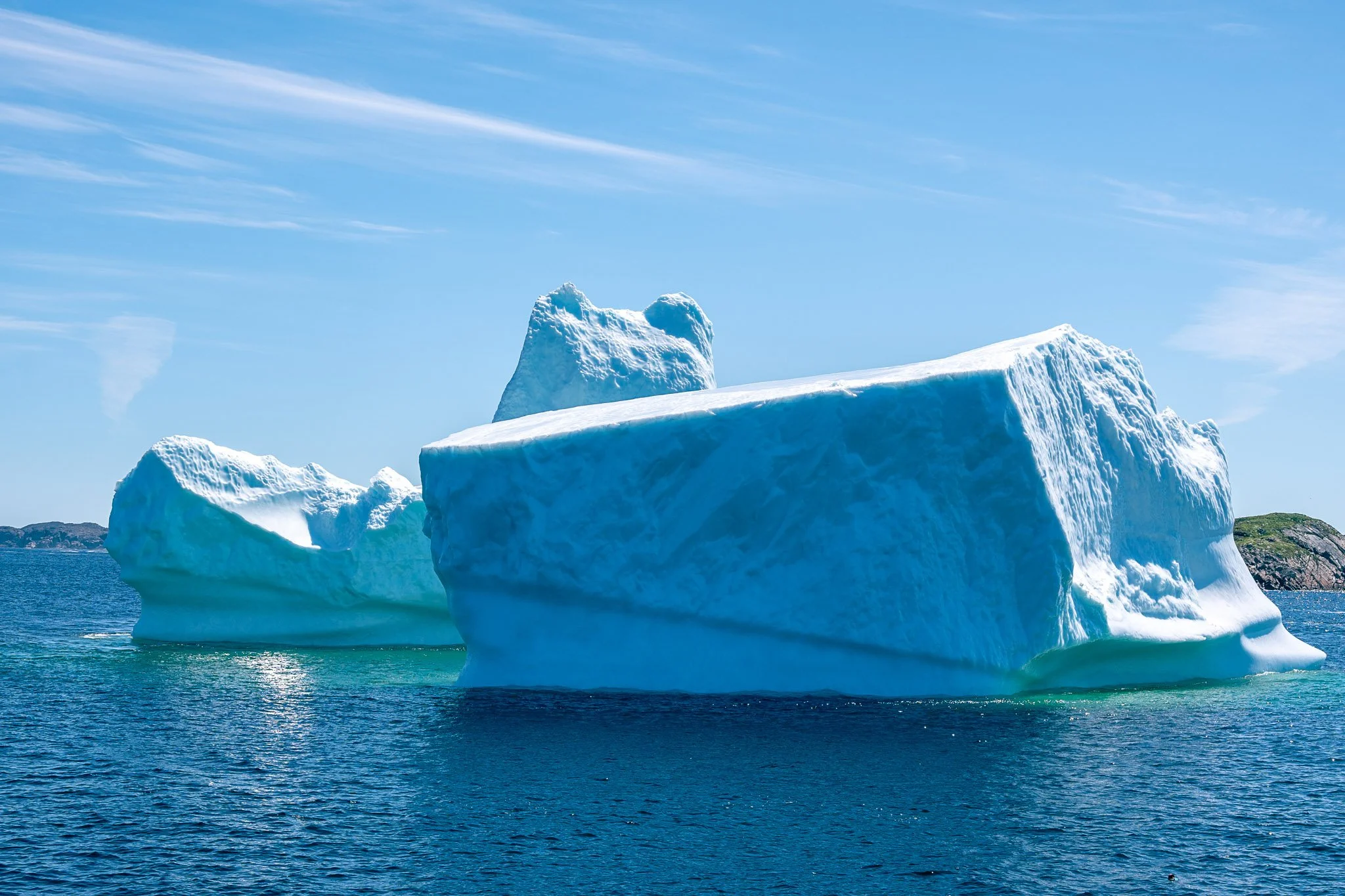
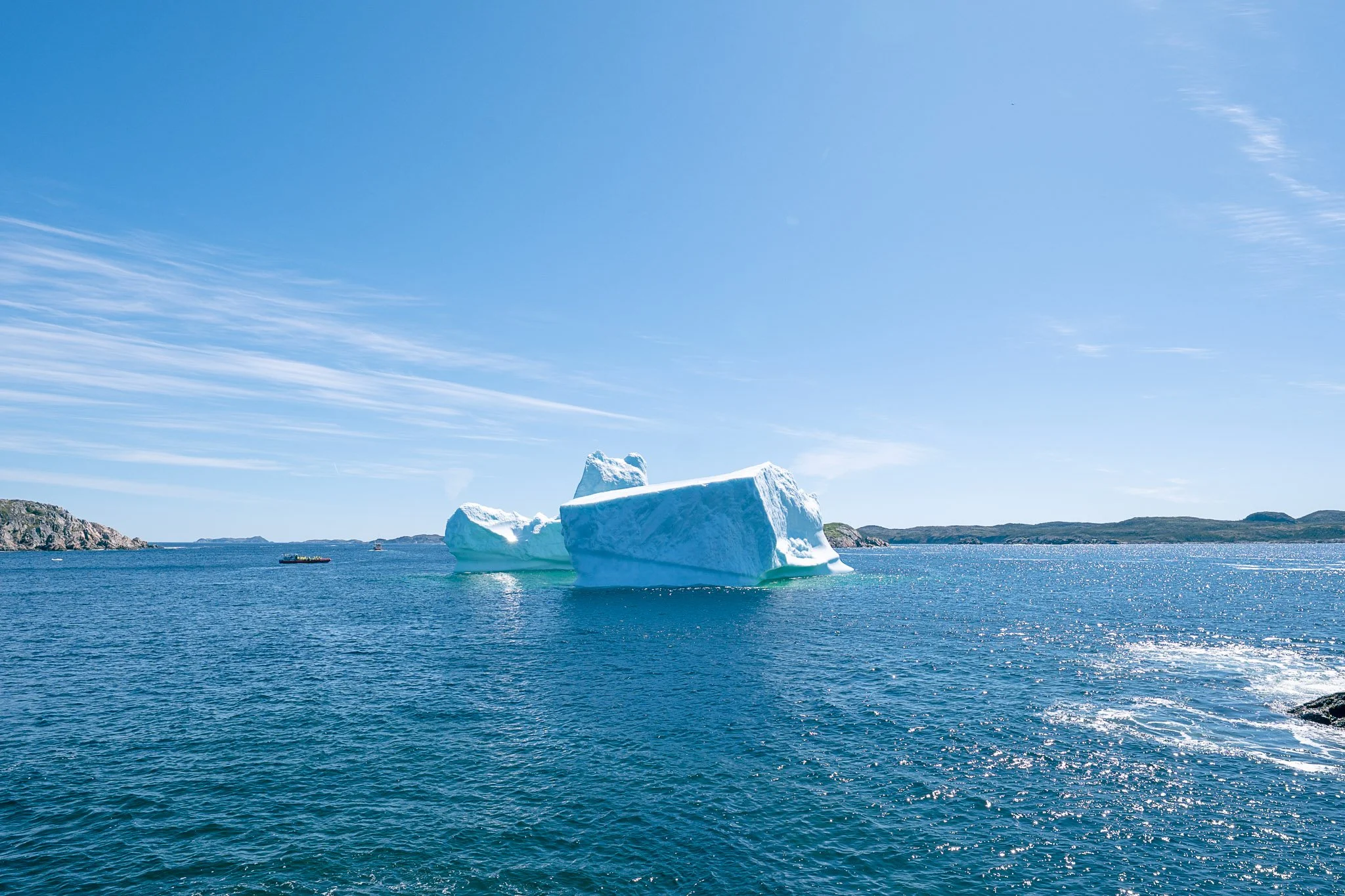
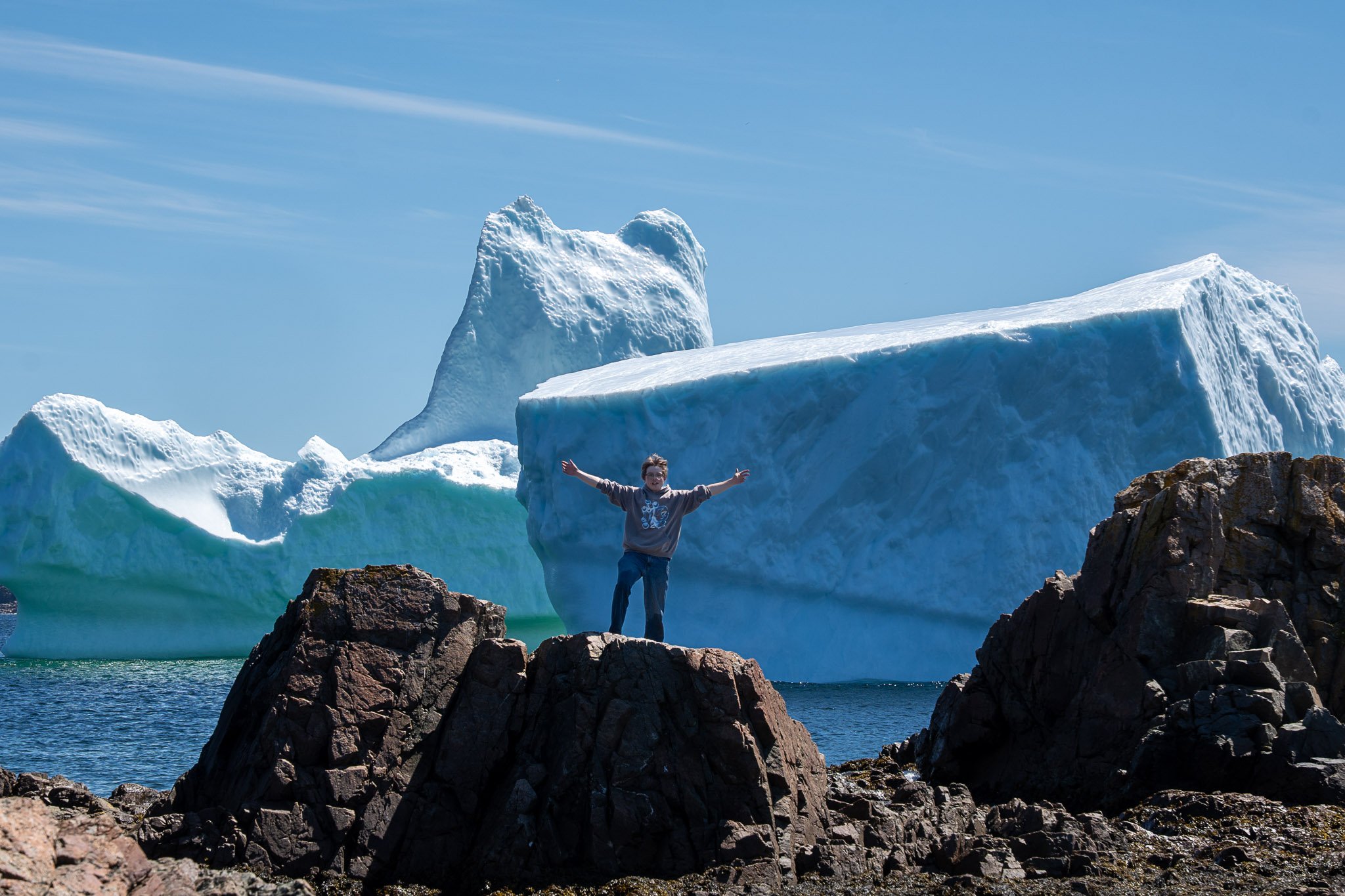
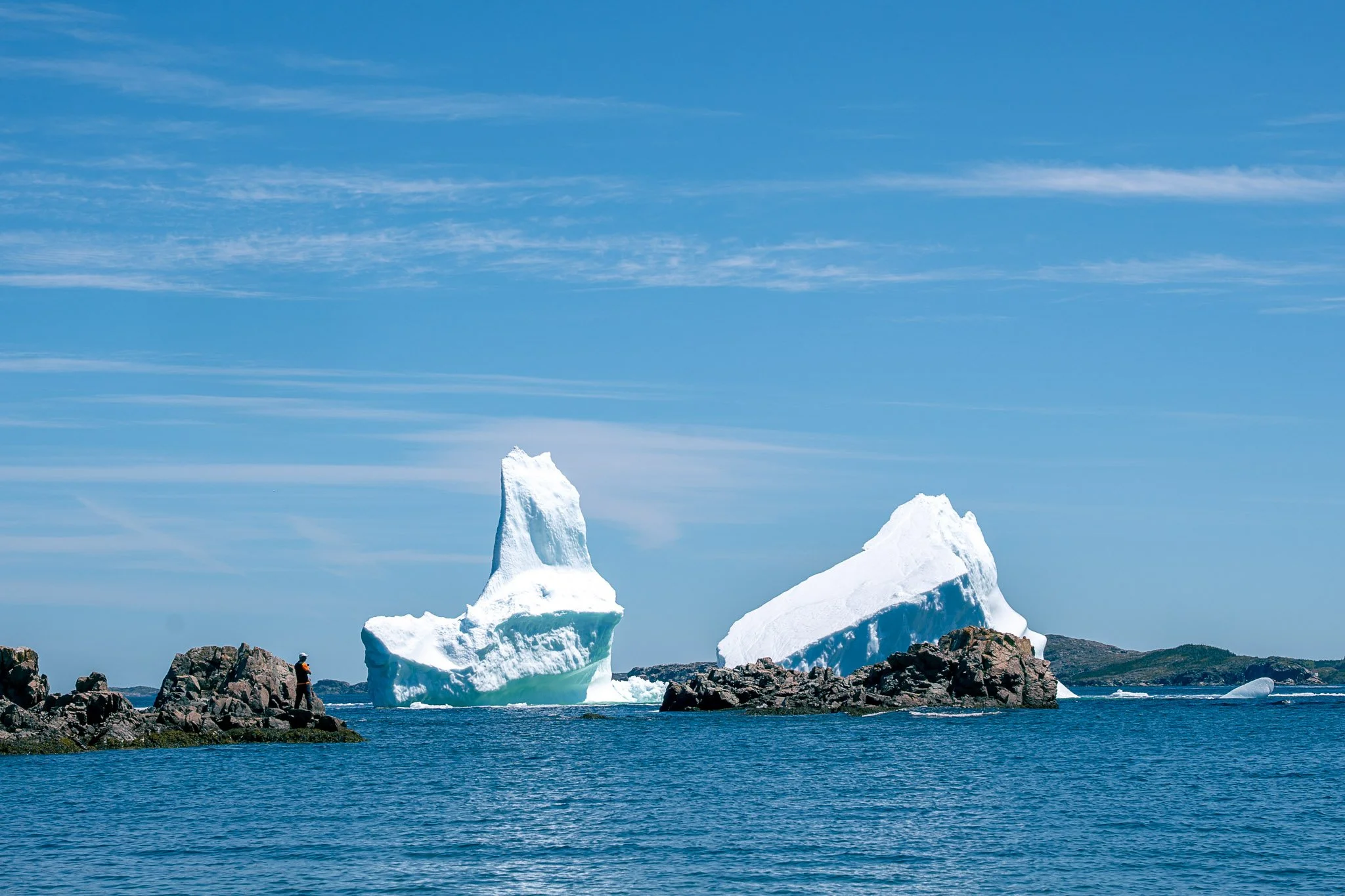
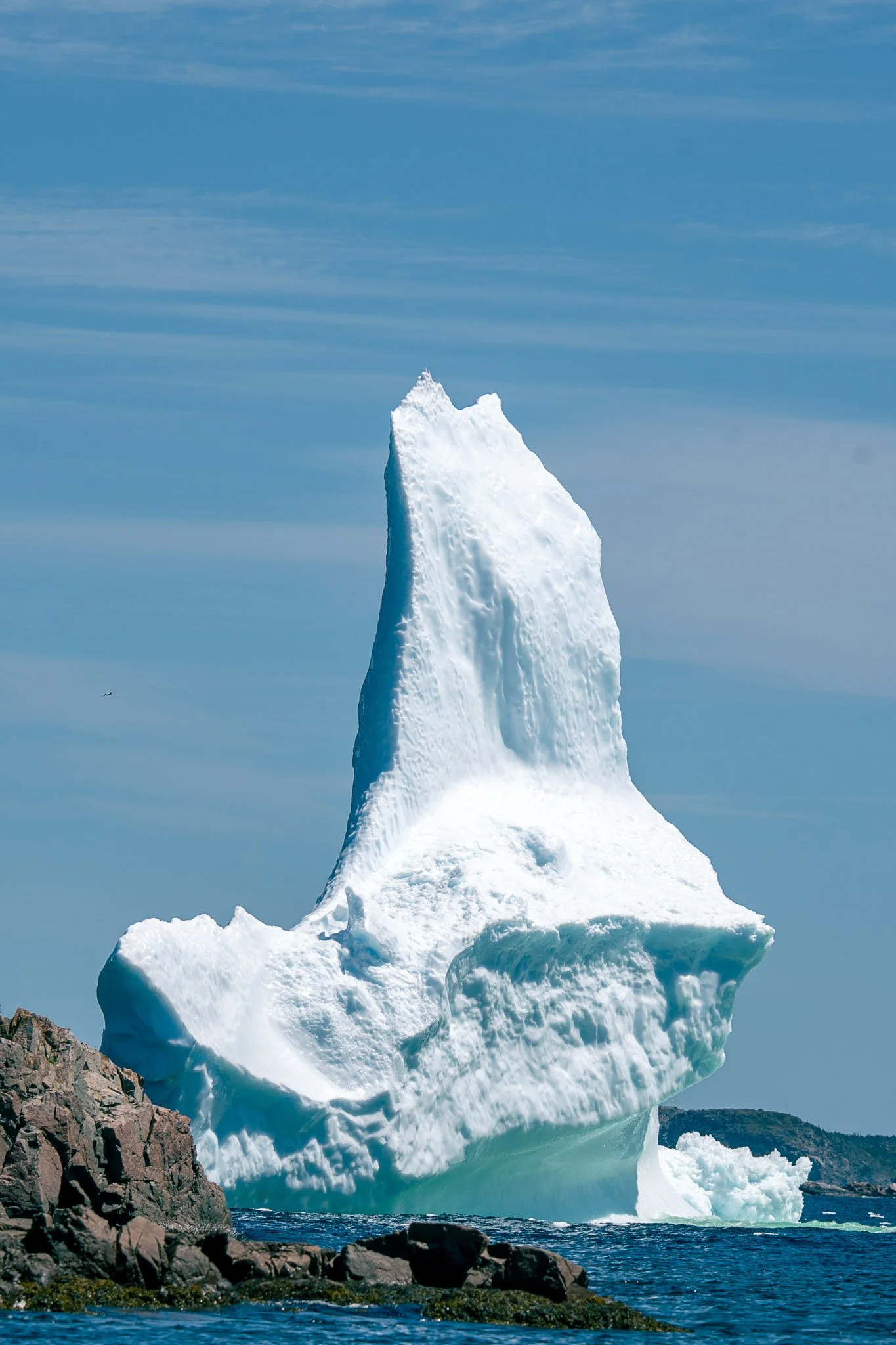
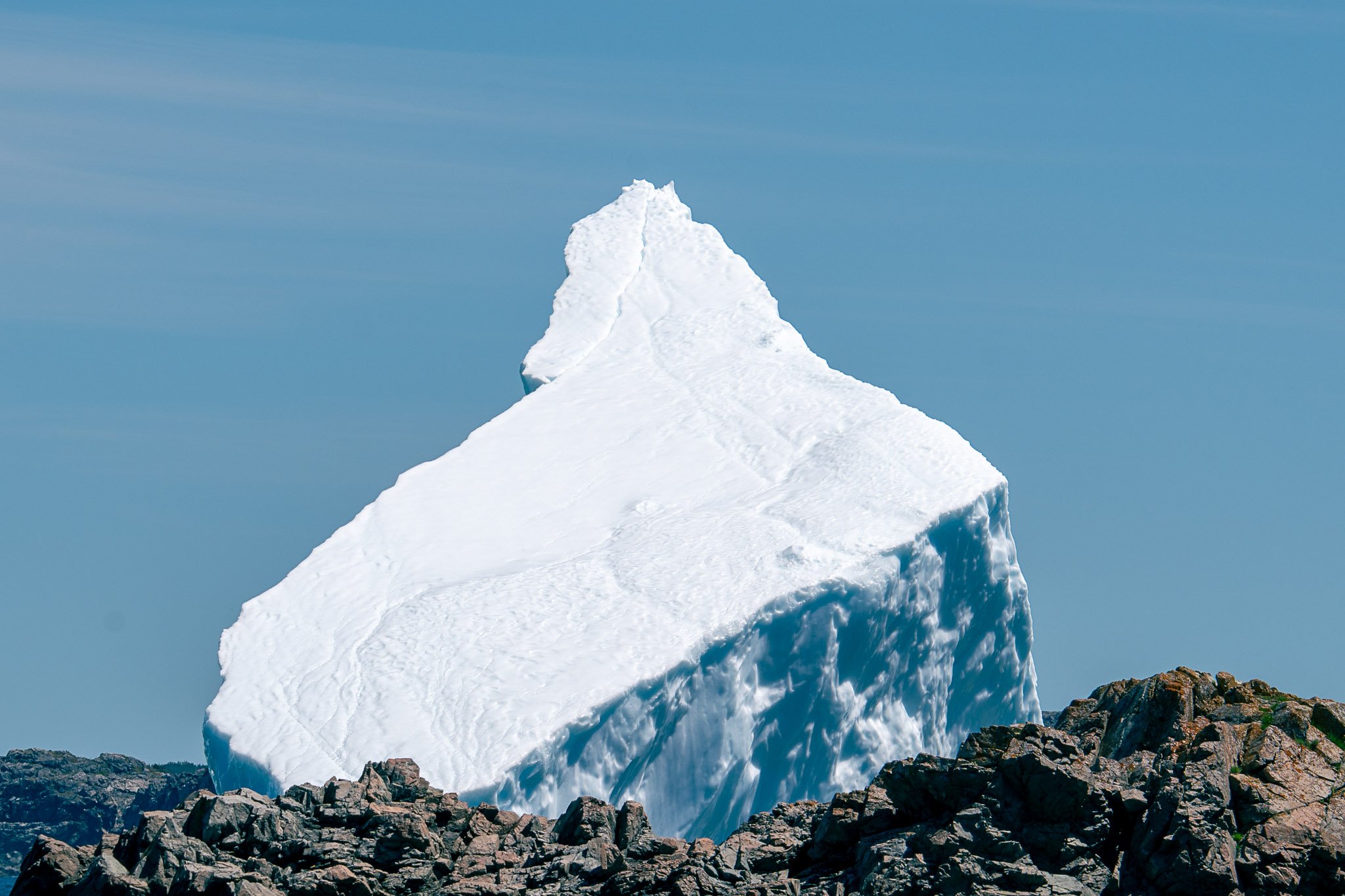
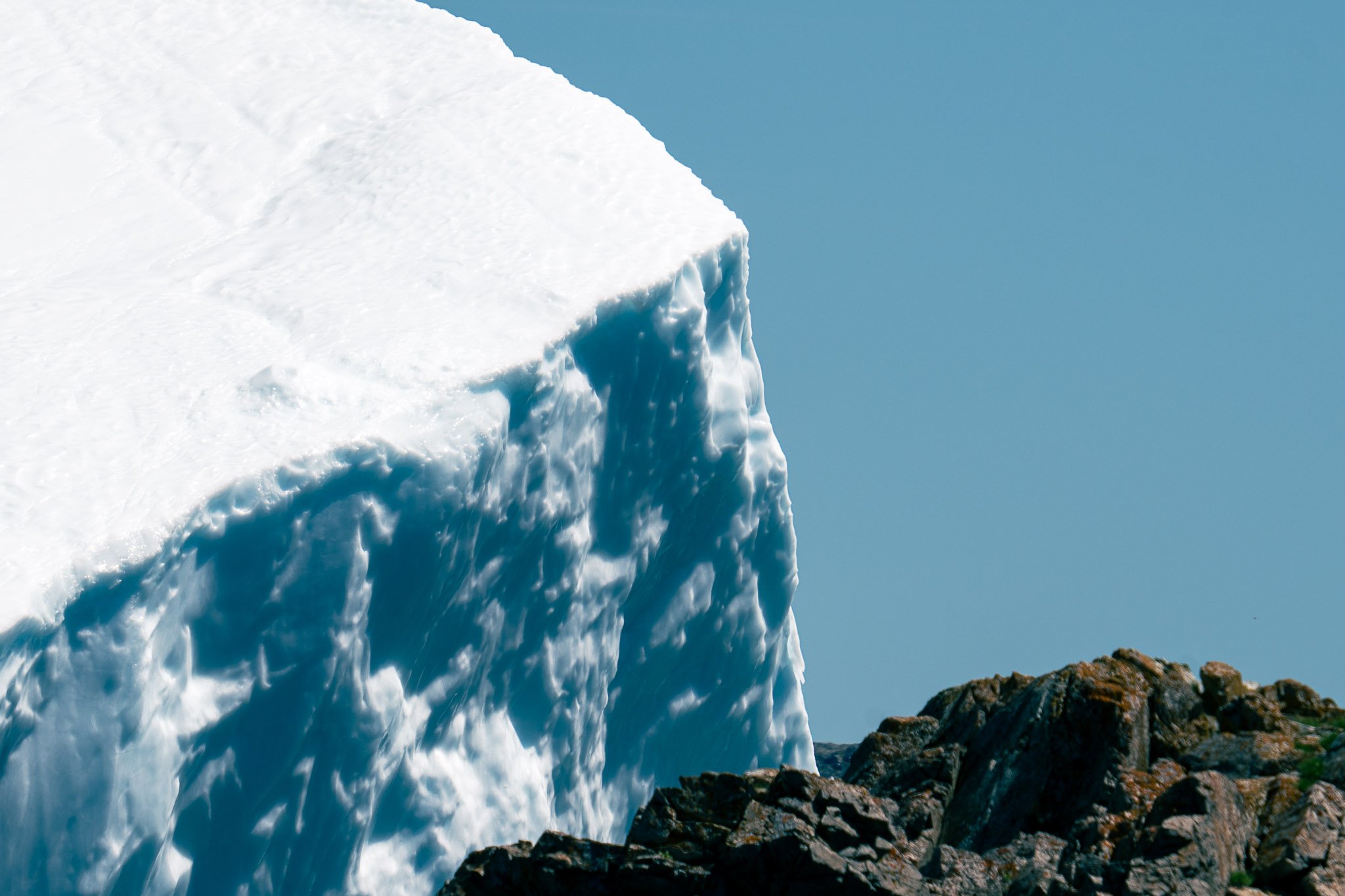
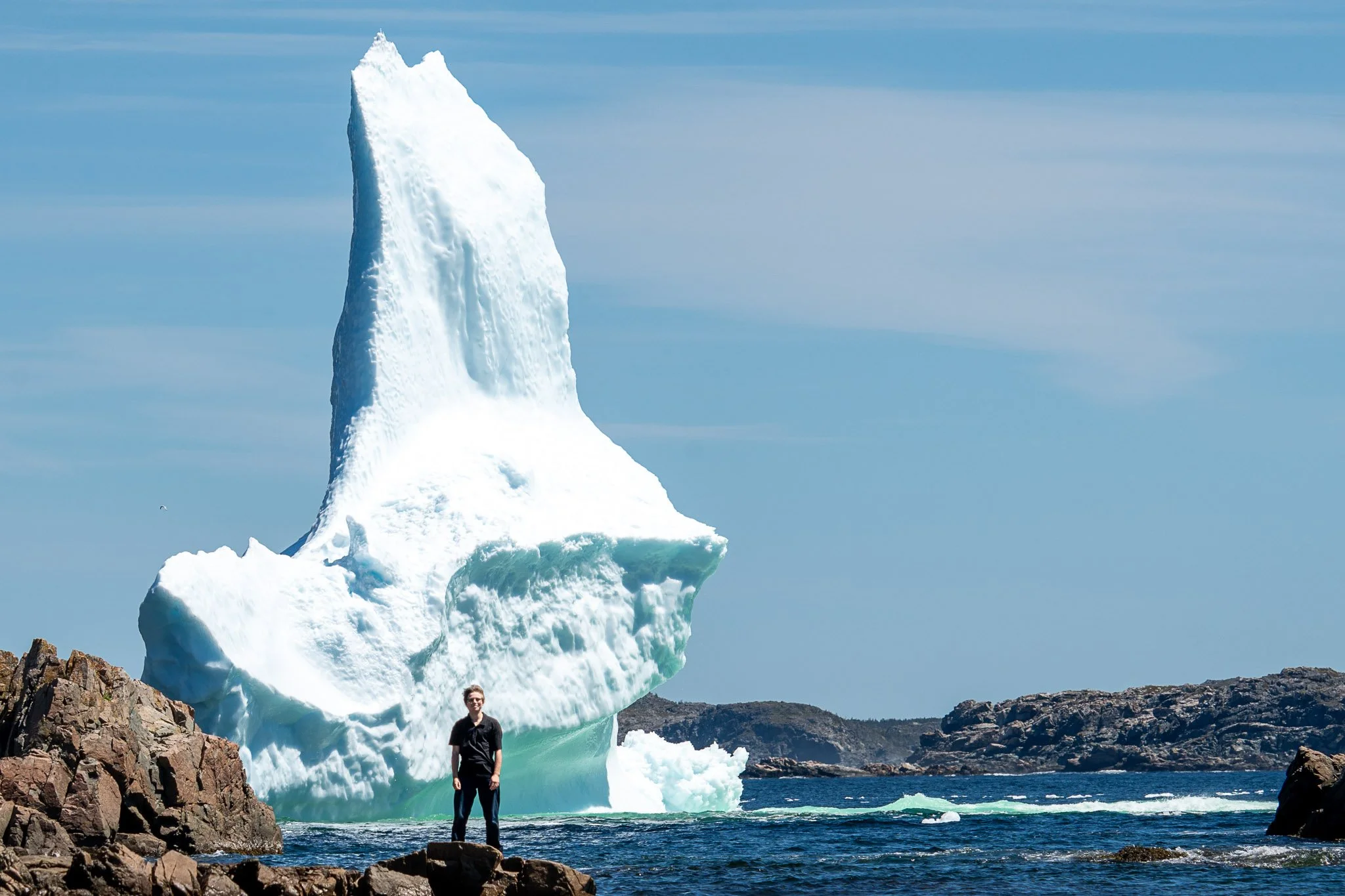
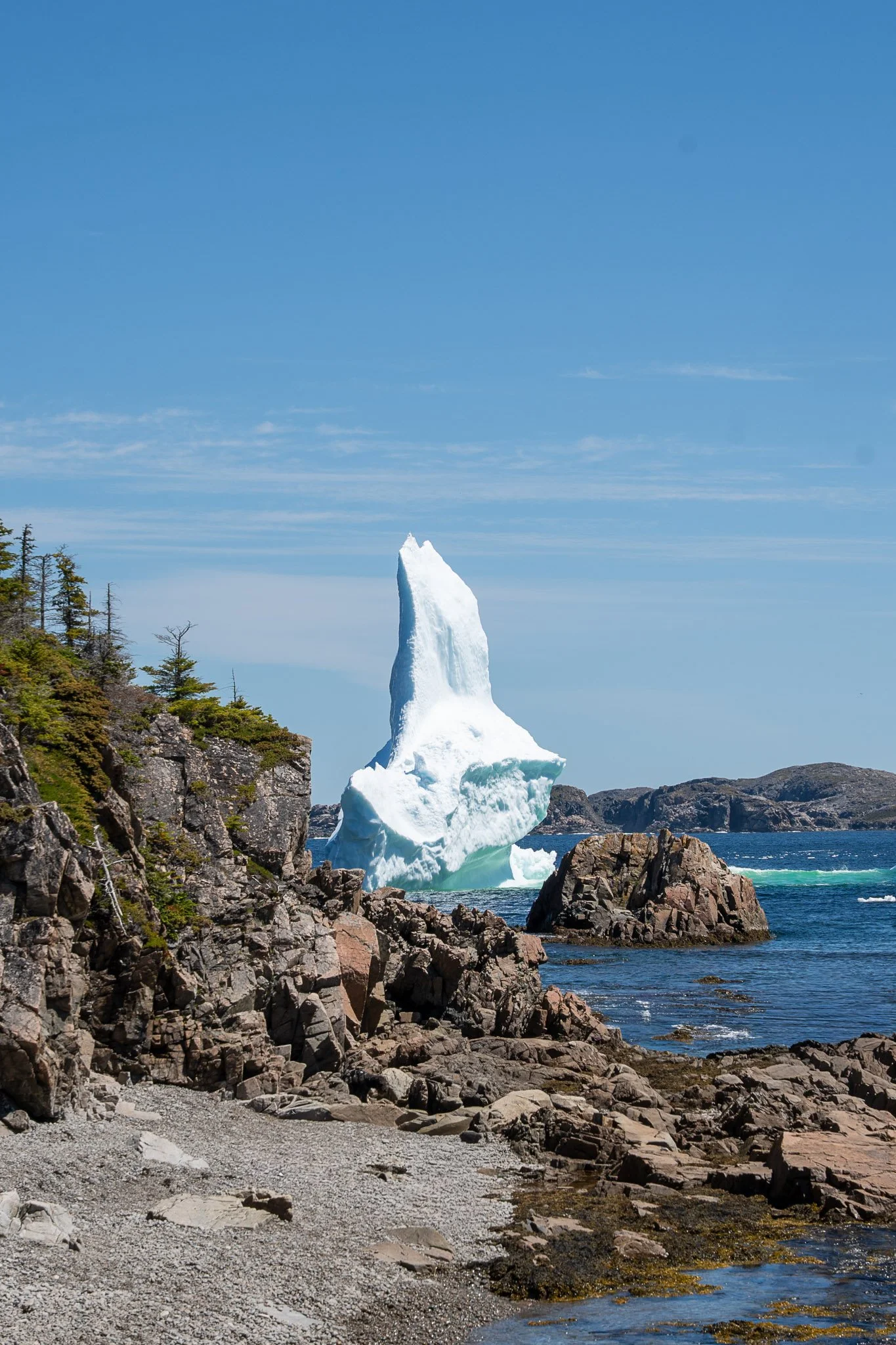
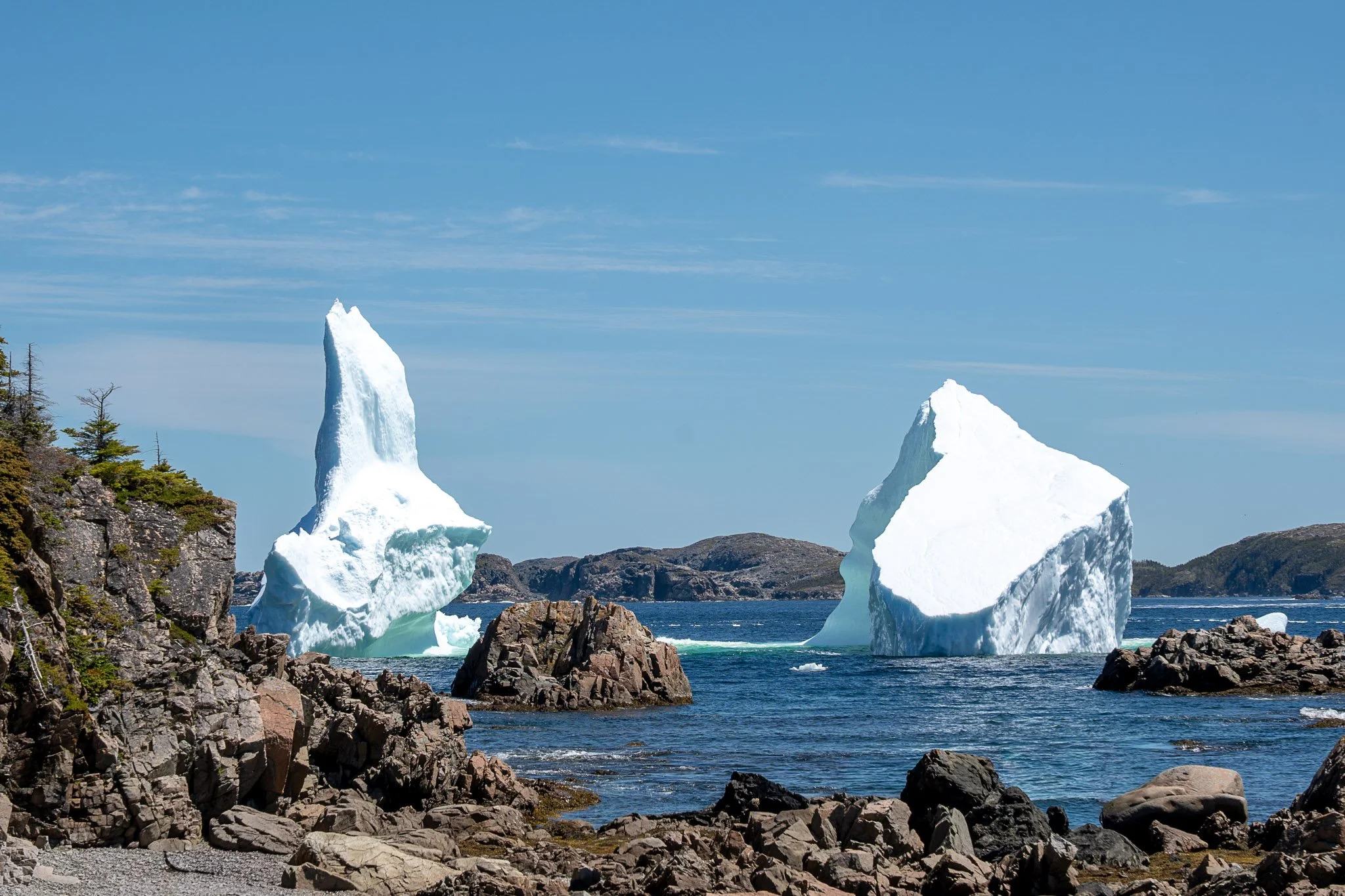
From the west coast we cut northeast to Twillingate, and this was the part I'd been thinking about for months. This stretch of coast has a nickname: Iceberg Alley. Every spring, icebergs that broke off the glaciers of Greenland drift south on the Labrador Current and pass right by the Newfoundland shore. June is one of the best months to catch them.
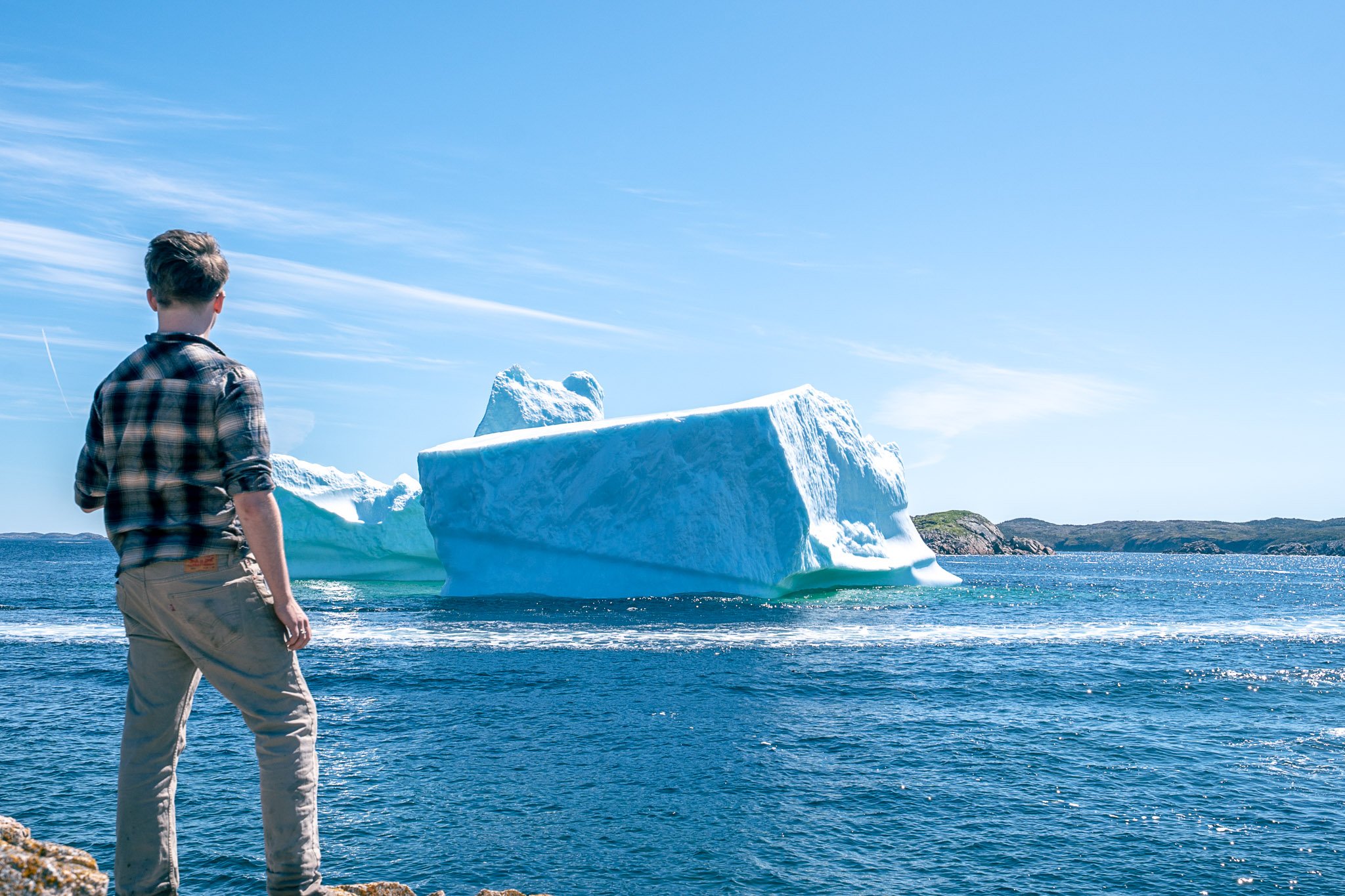
We hiked out to one, and it was incredible. Photos do not prepare you for the size. Some of these bergs are the size of buildings, drifting slowly past the coast, and that's only the part you can see. Roughly 90 percent of an iceberg sits below the surface, so the chunk above the water is a fraction of the whole thing. The ice itself can be 10,000 years old or more, compressed snow that fell long before anything you'd call history. Standing at the edge of the rock looking at something that big and that old is exactly the kind of moment worth driving two days for.
Terra Nova and the moose that never showed
Heading east we cut through Terra Nova National Park and camped. I'll be honest: the mosquitoes were insane. Bring whatever bug spray you think is enough, then bring more.
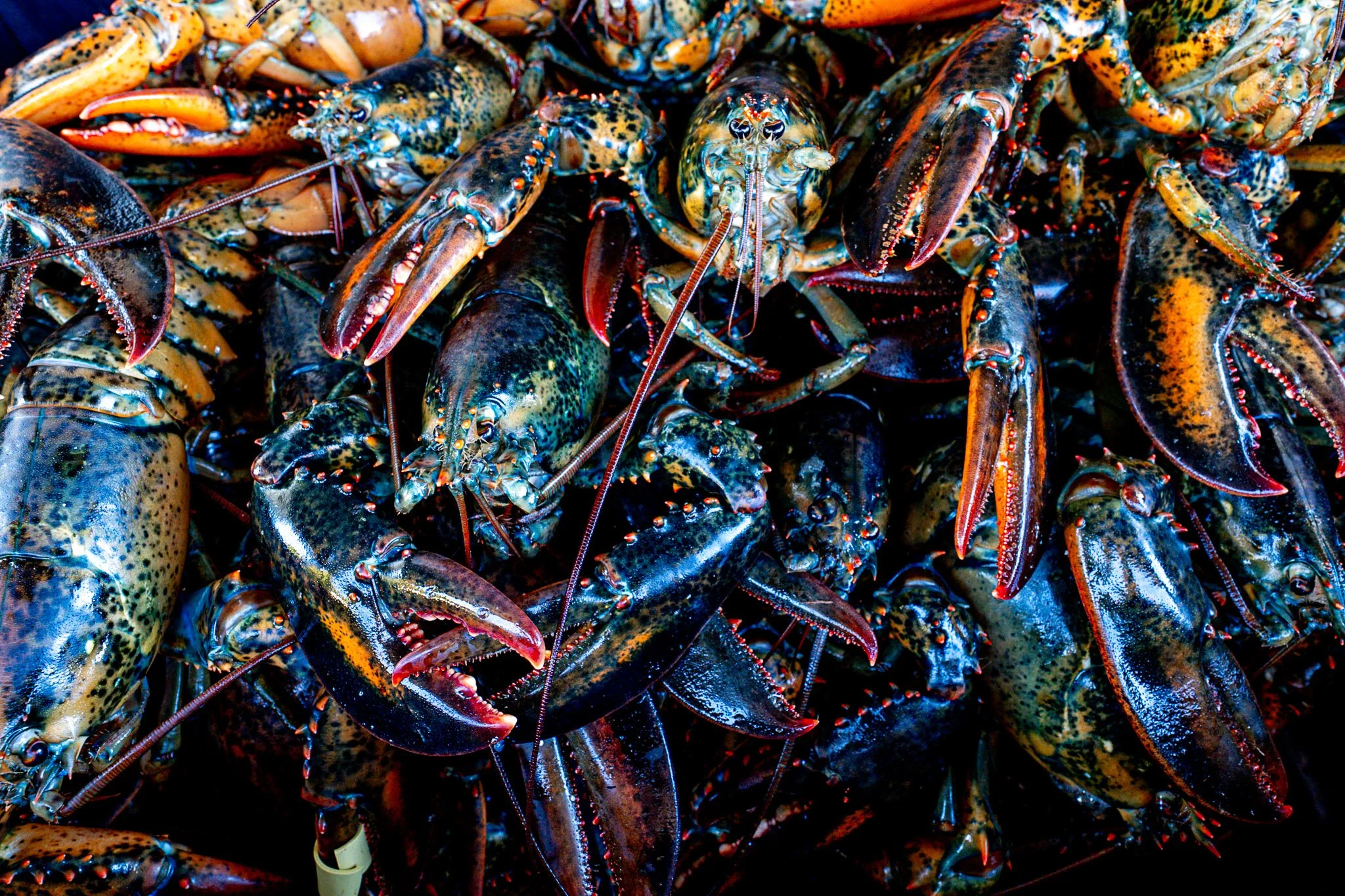
This is also where I have to admit our one real failure of the trip. We wanted to see a moose so fucking bad. Gros Morne and Terra Nova are both crawling with them, people hit them on the highway, and we spent ten days scanning every treeline and bog like a couple of idiots. We saw zero. Not one. The closest we got was eating a moose burger and a moose sausage later in the trip, which did nothing to fix the hole in my heart.
Elliston: the puffins
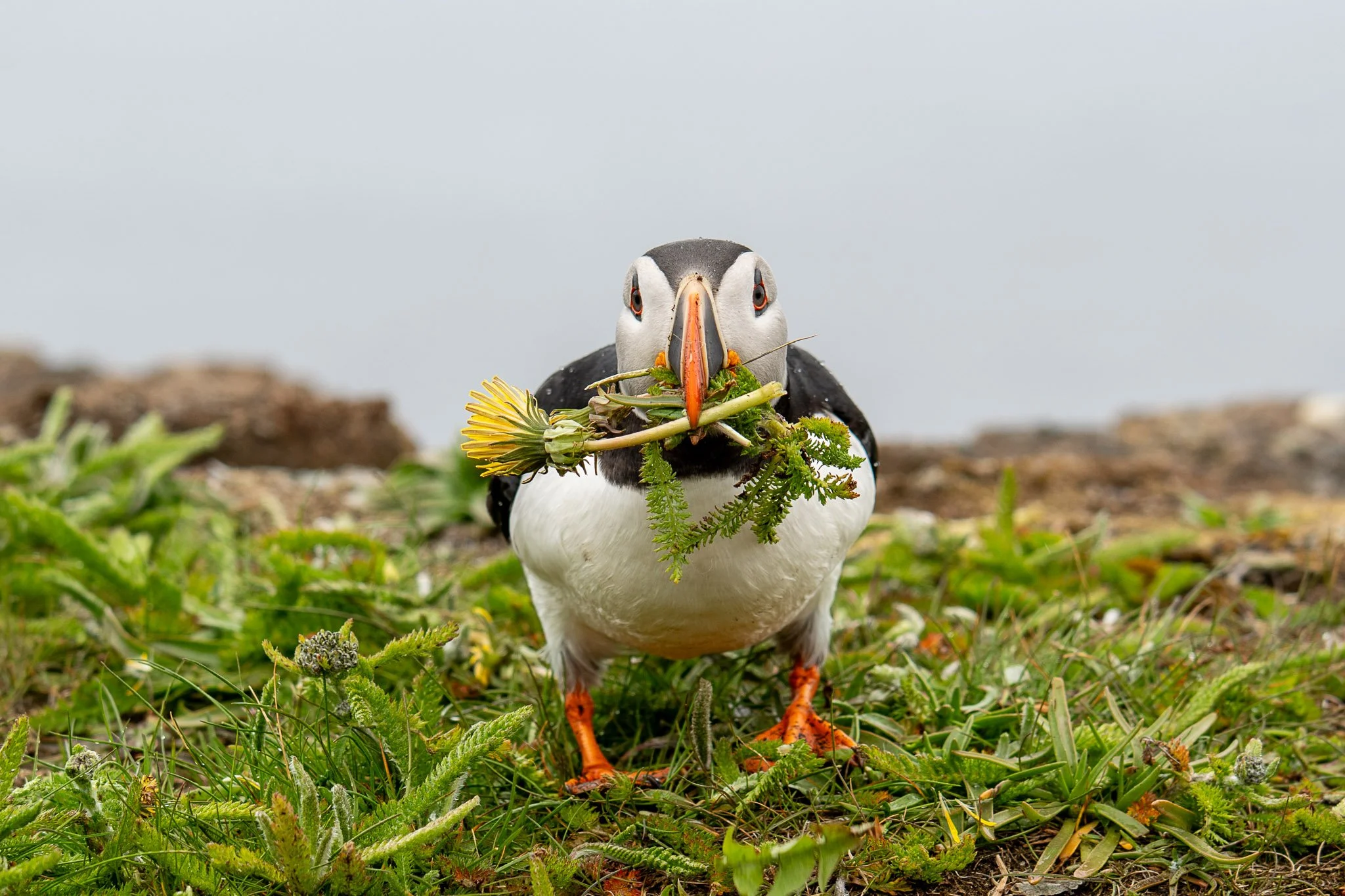
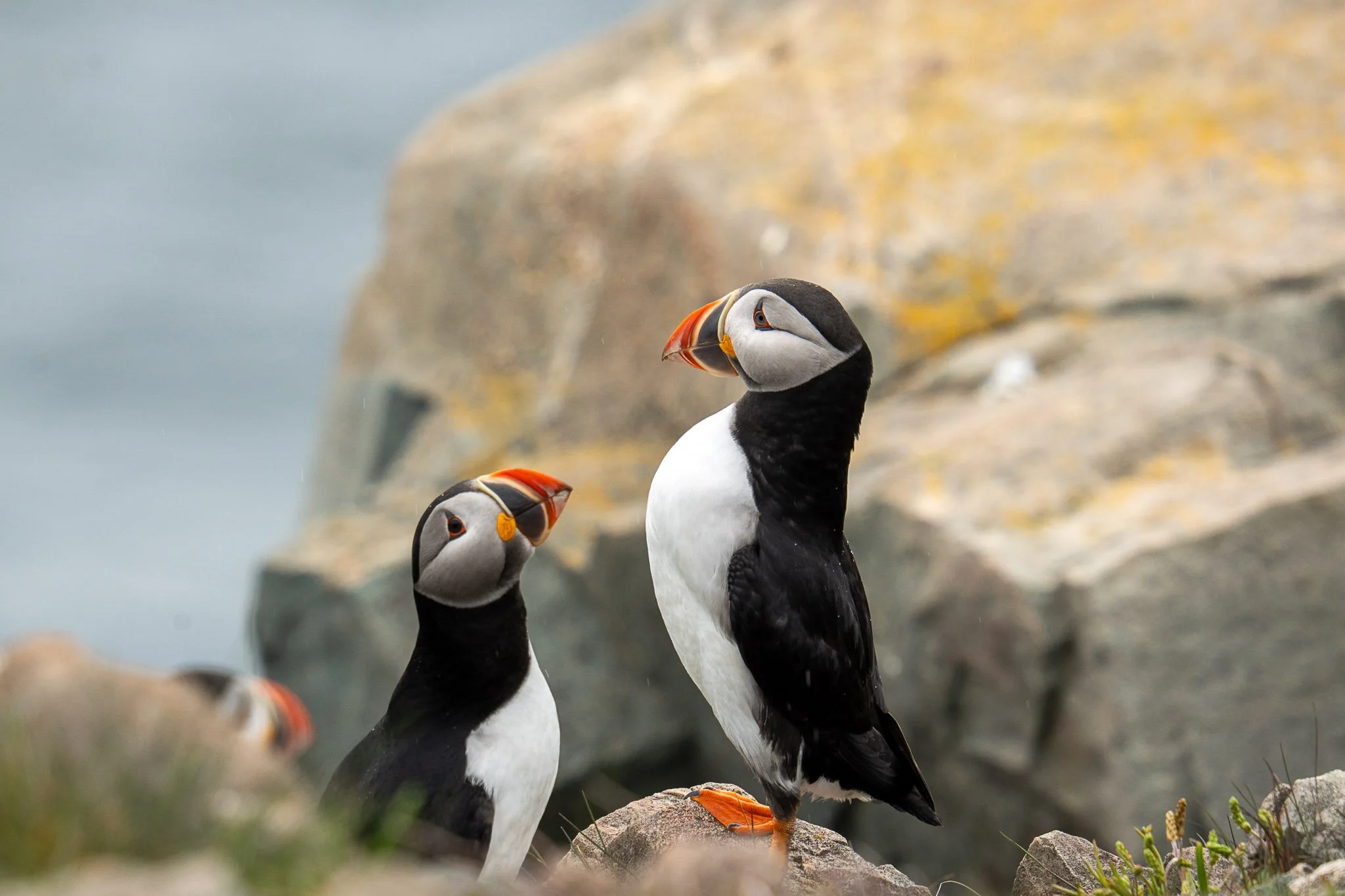
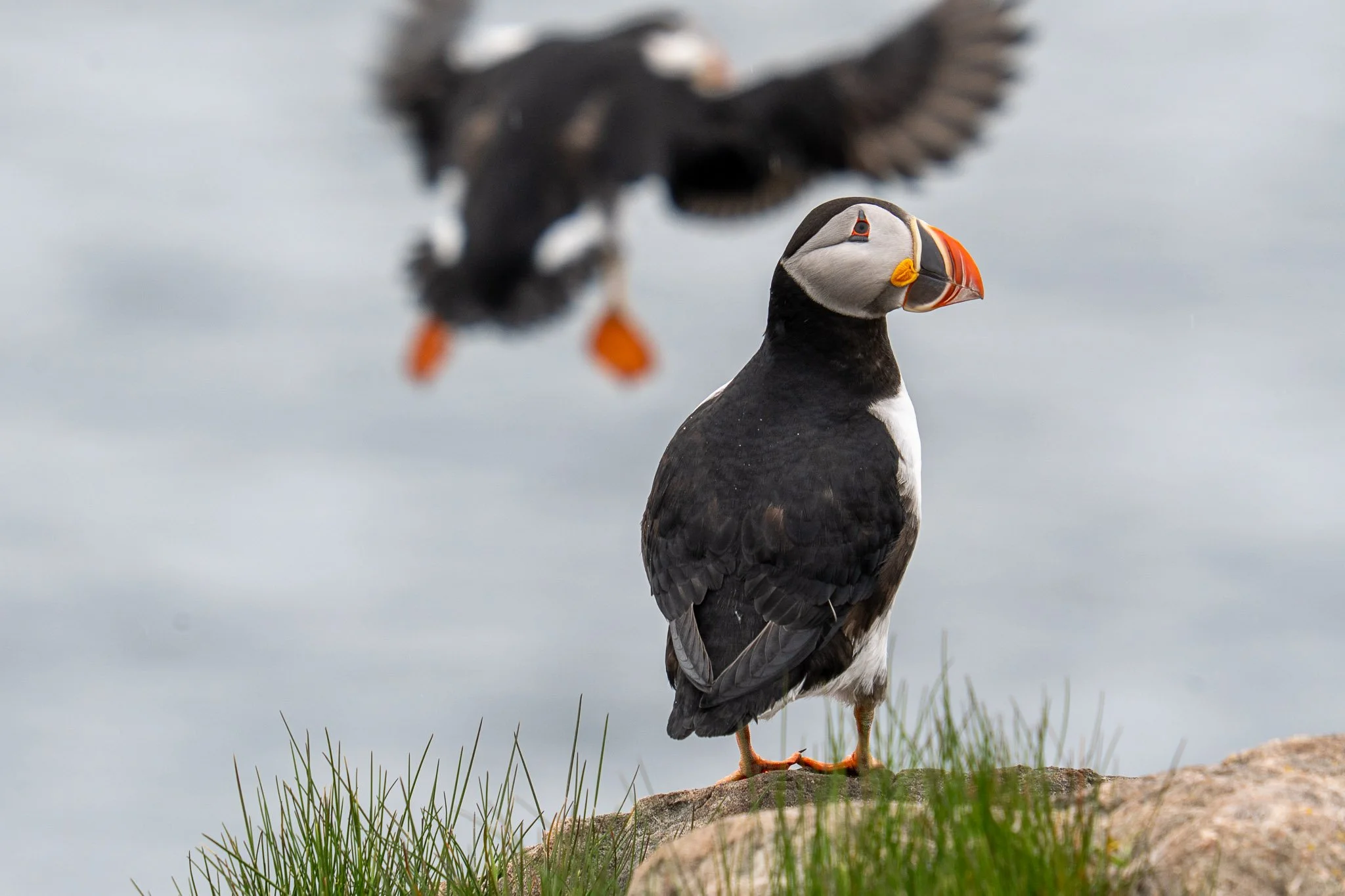
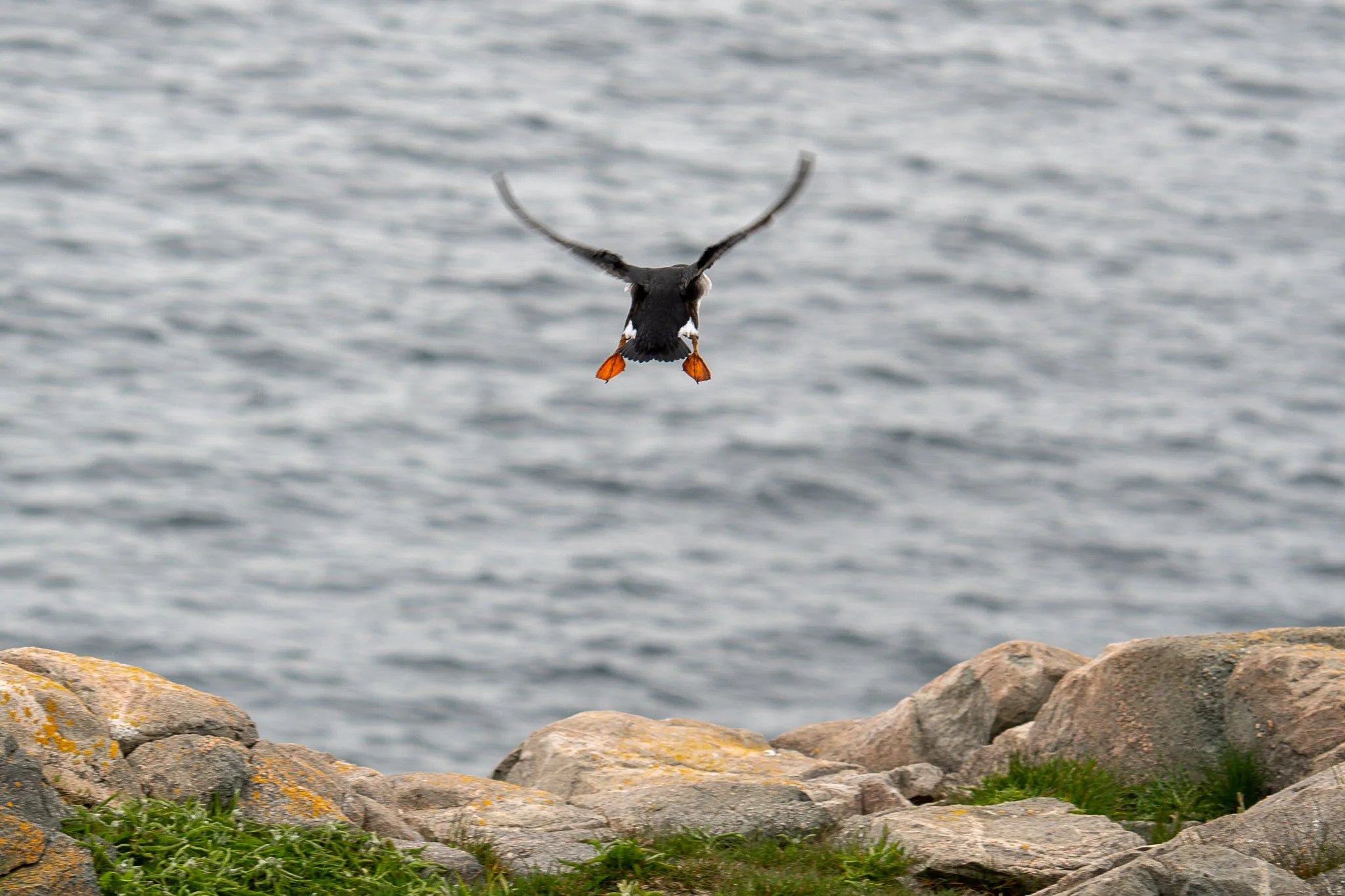
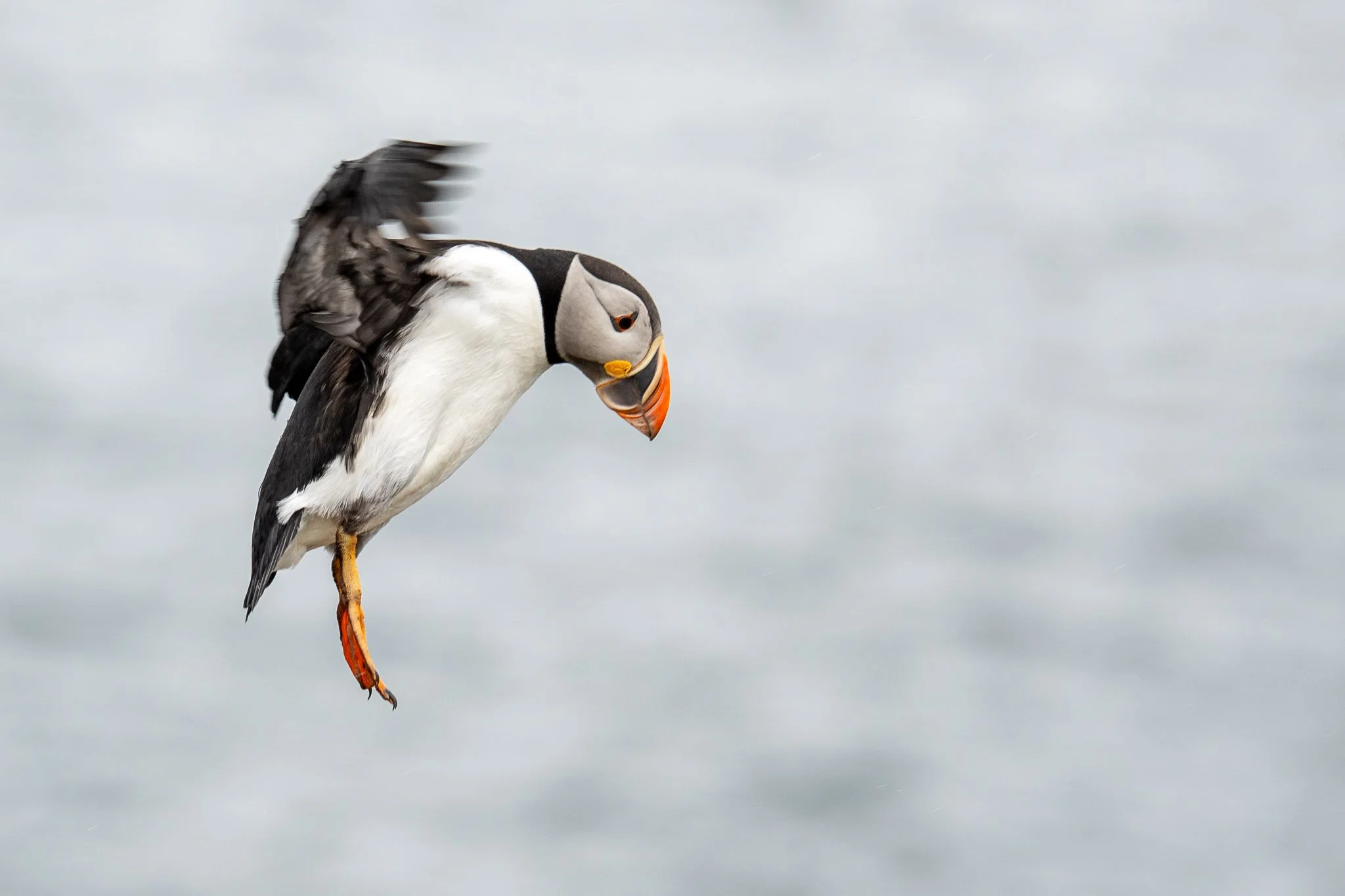
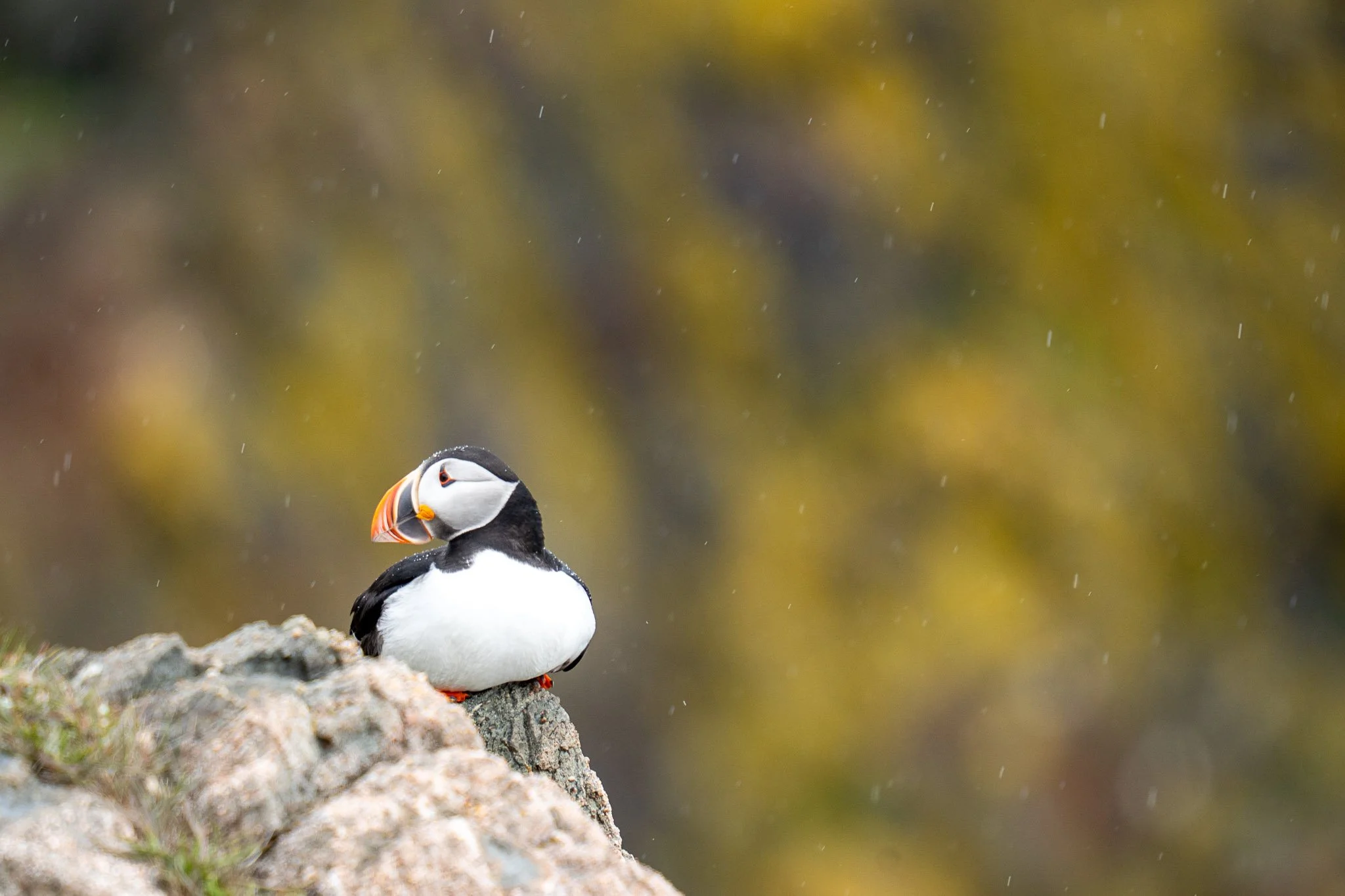
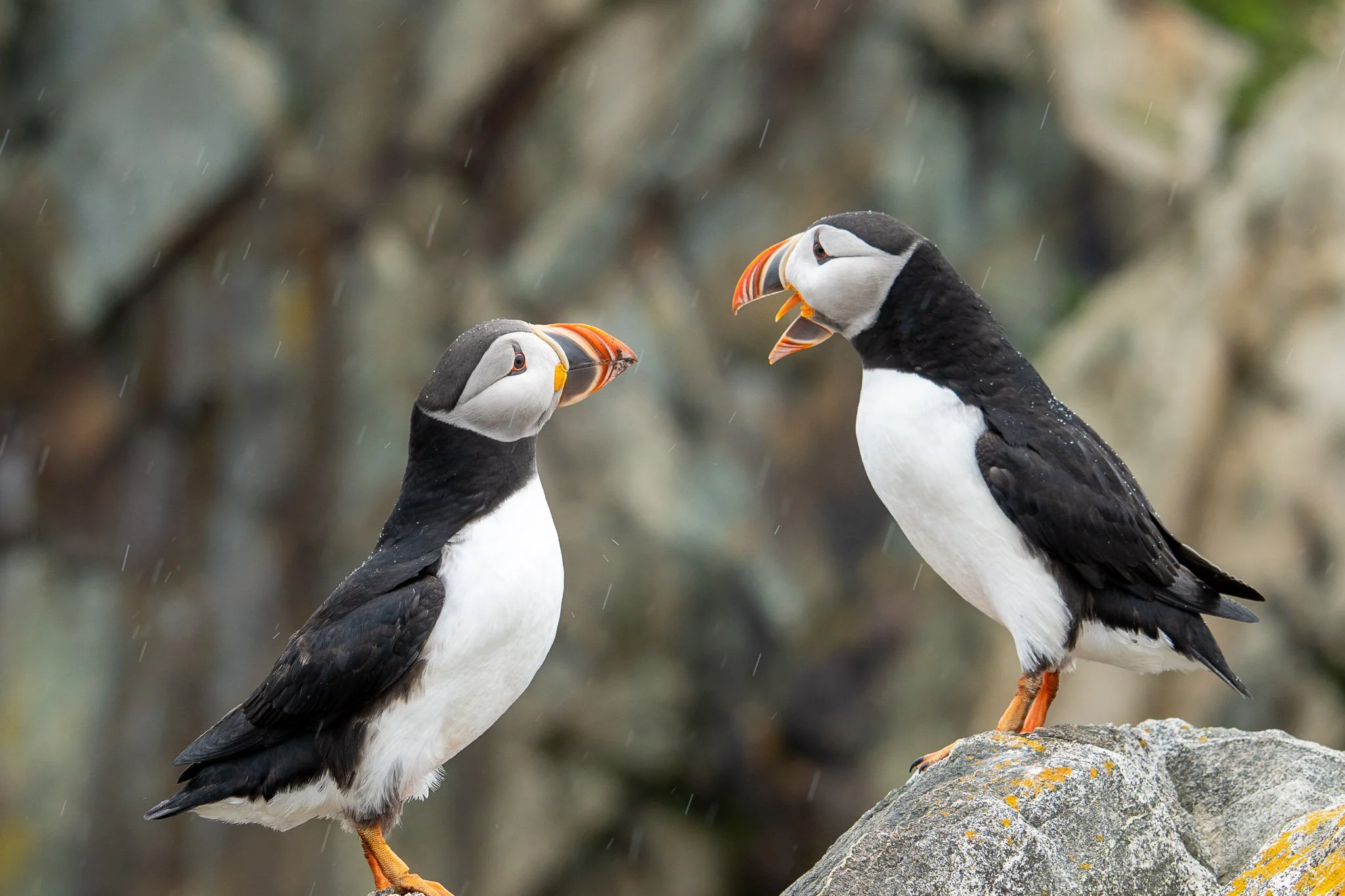
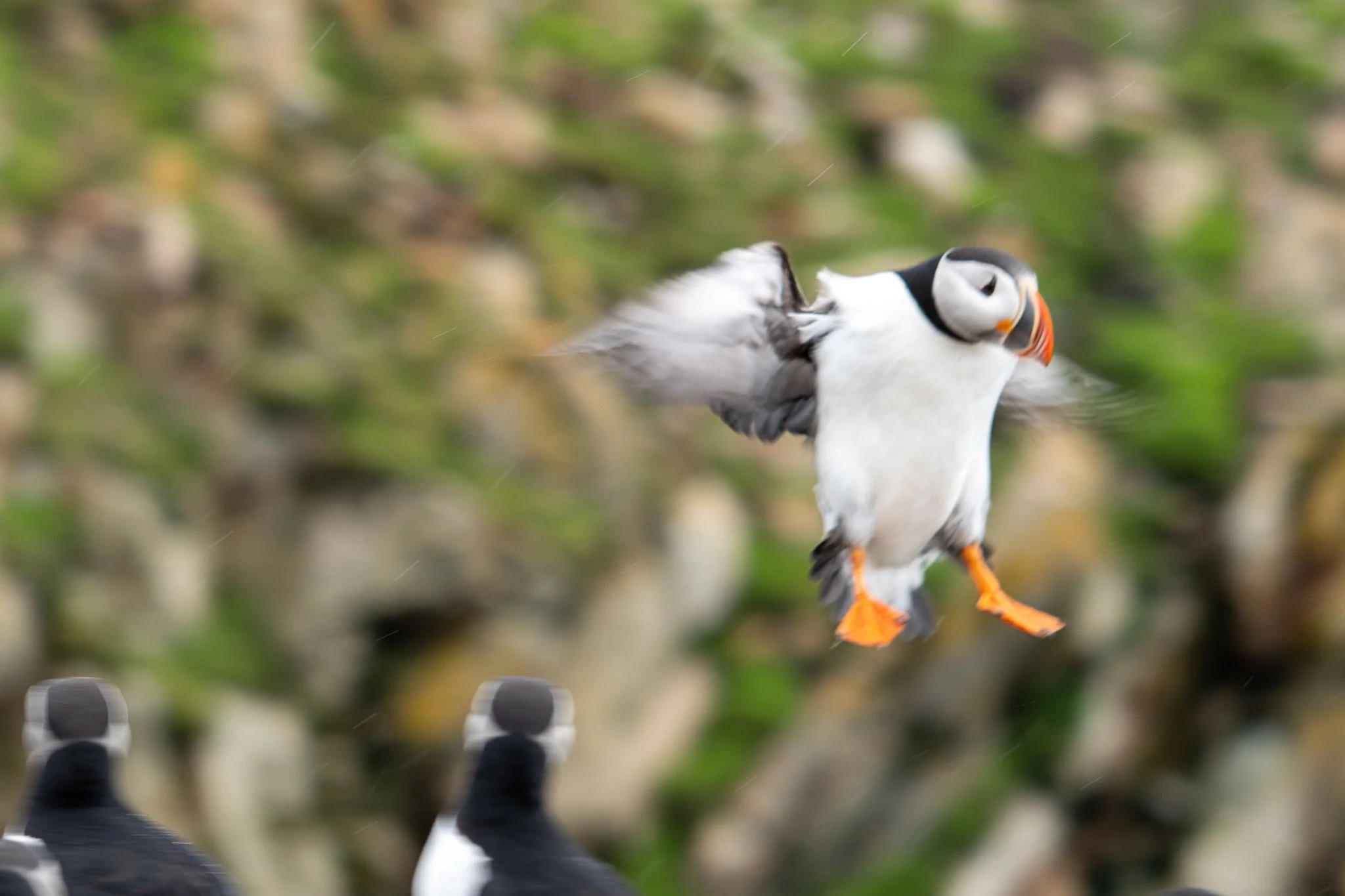
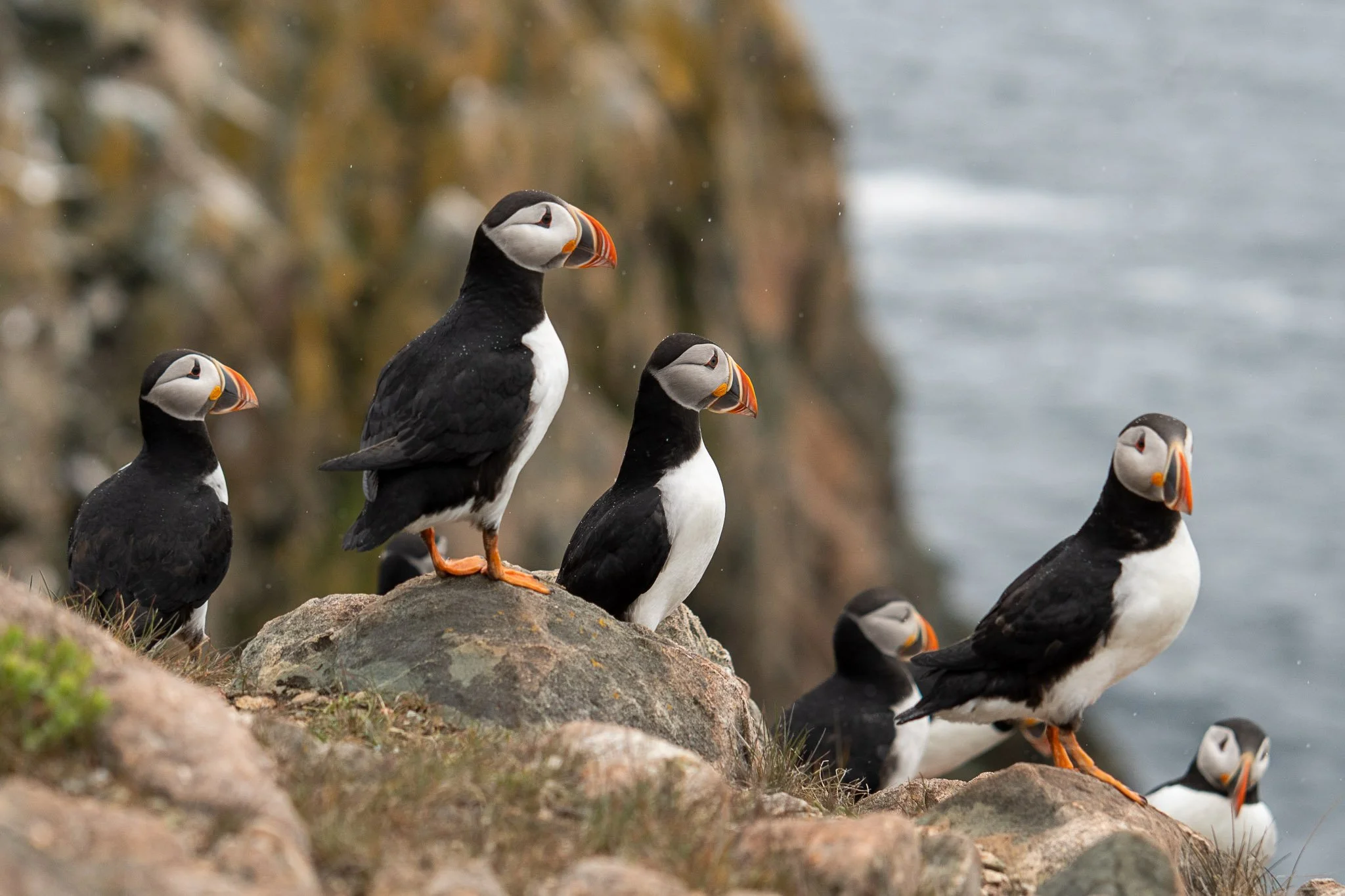
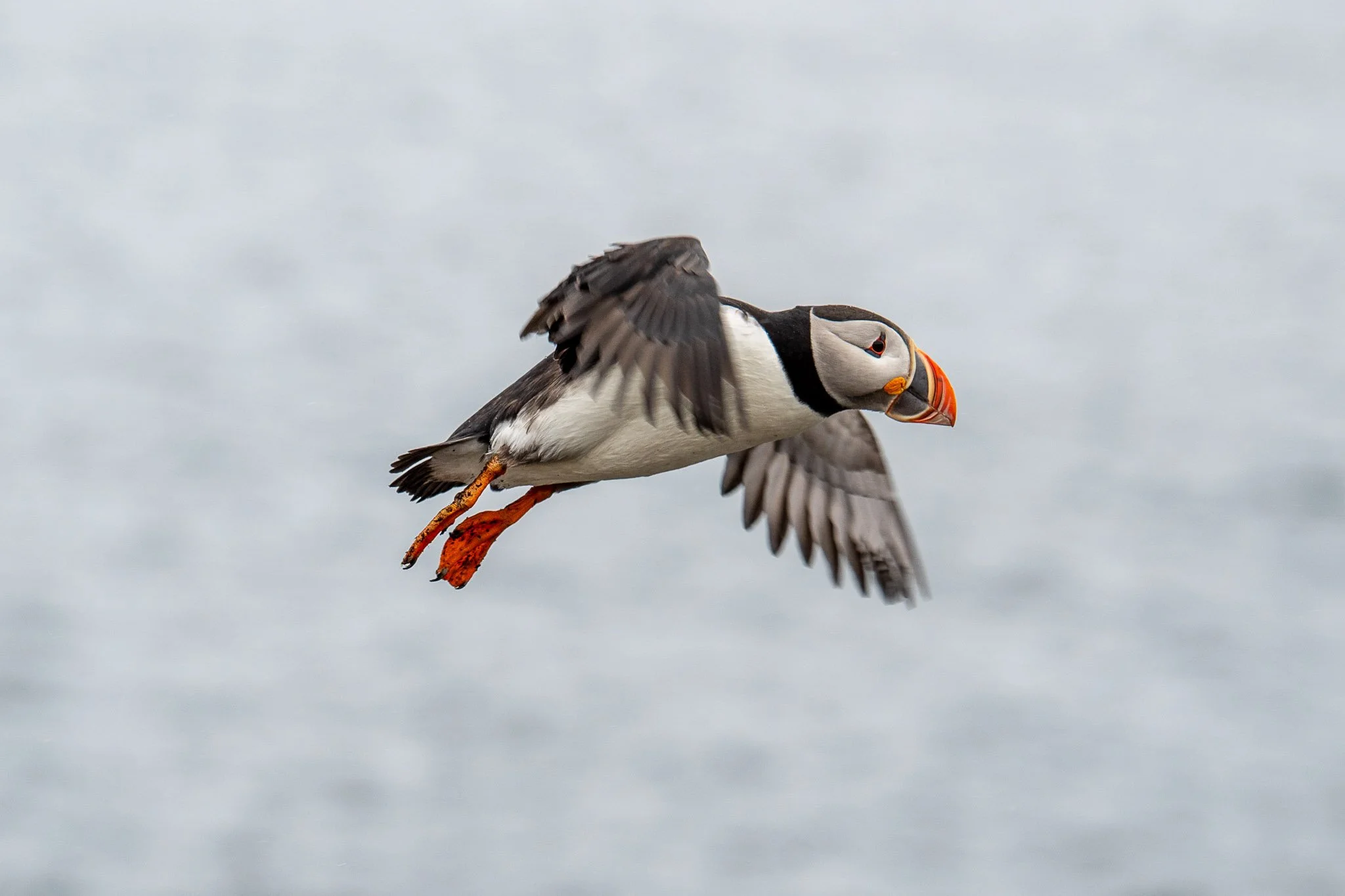
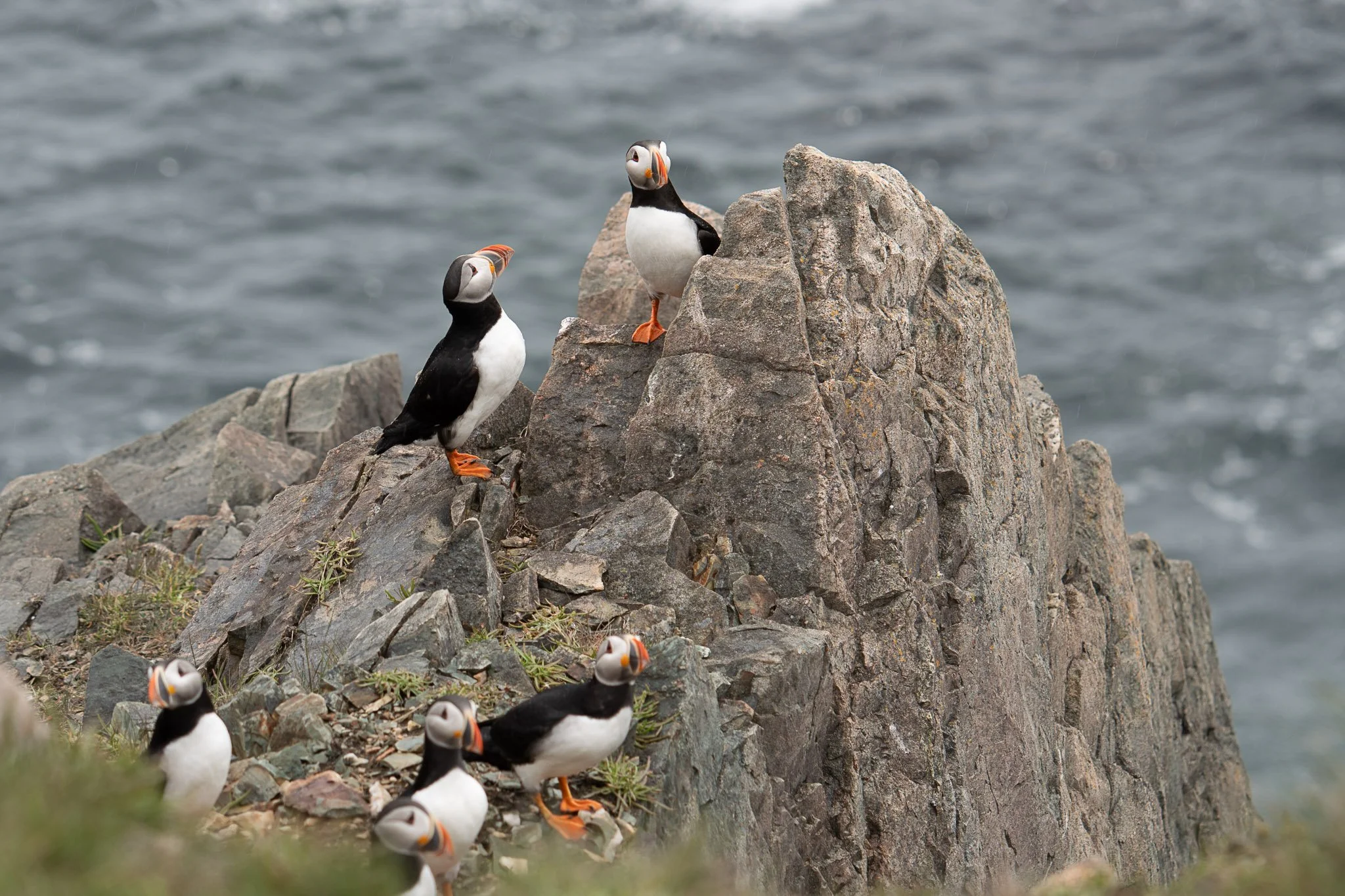
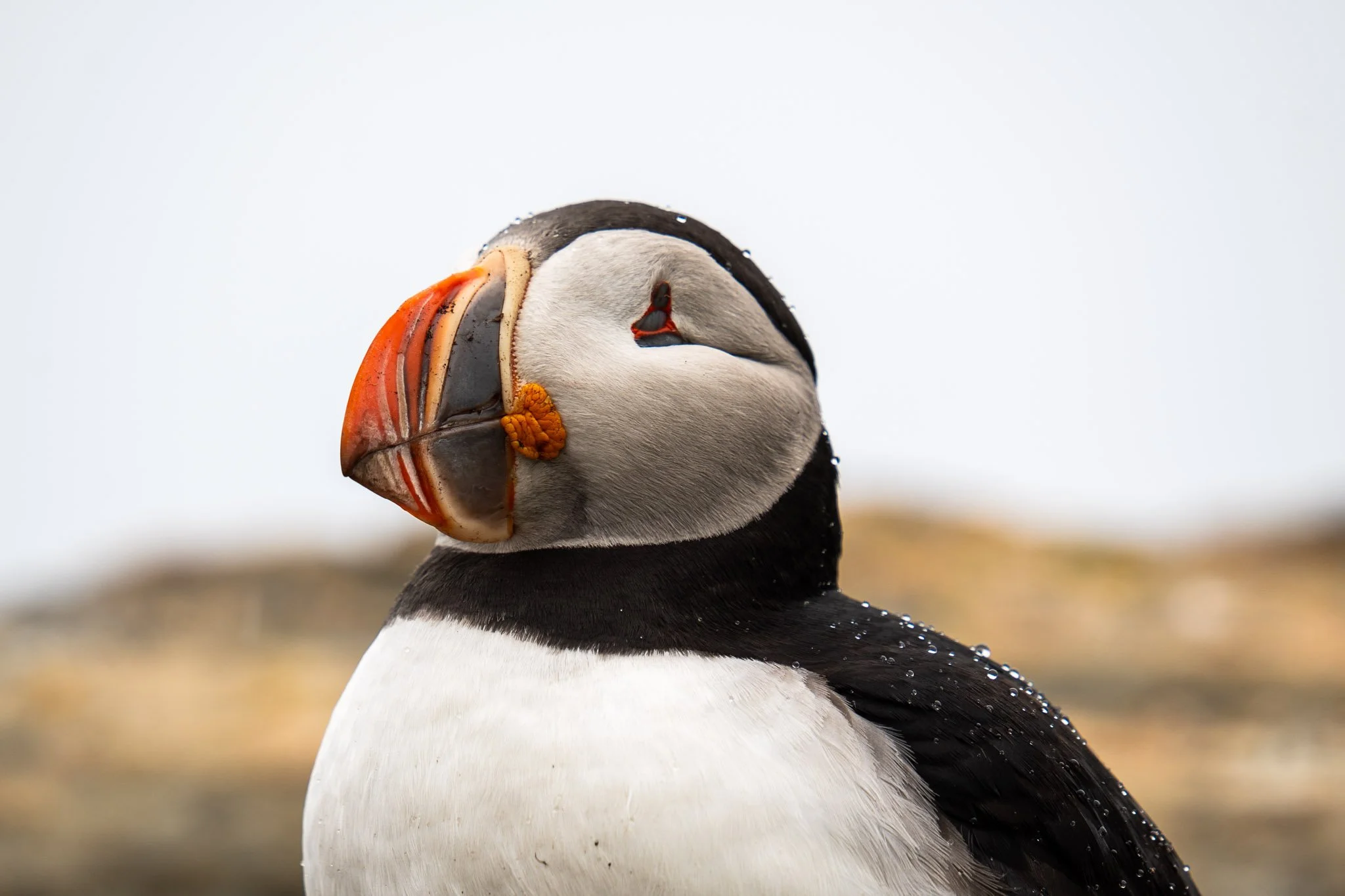
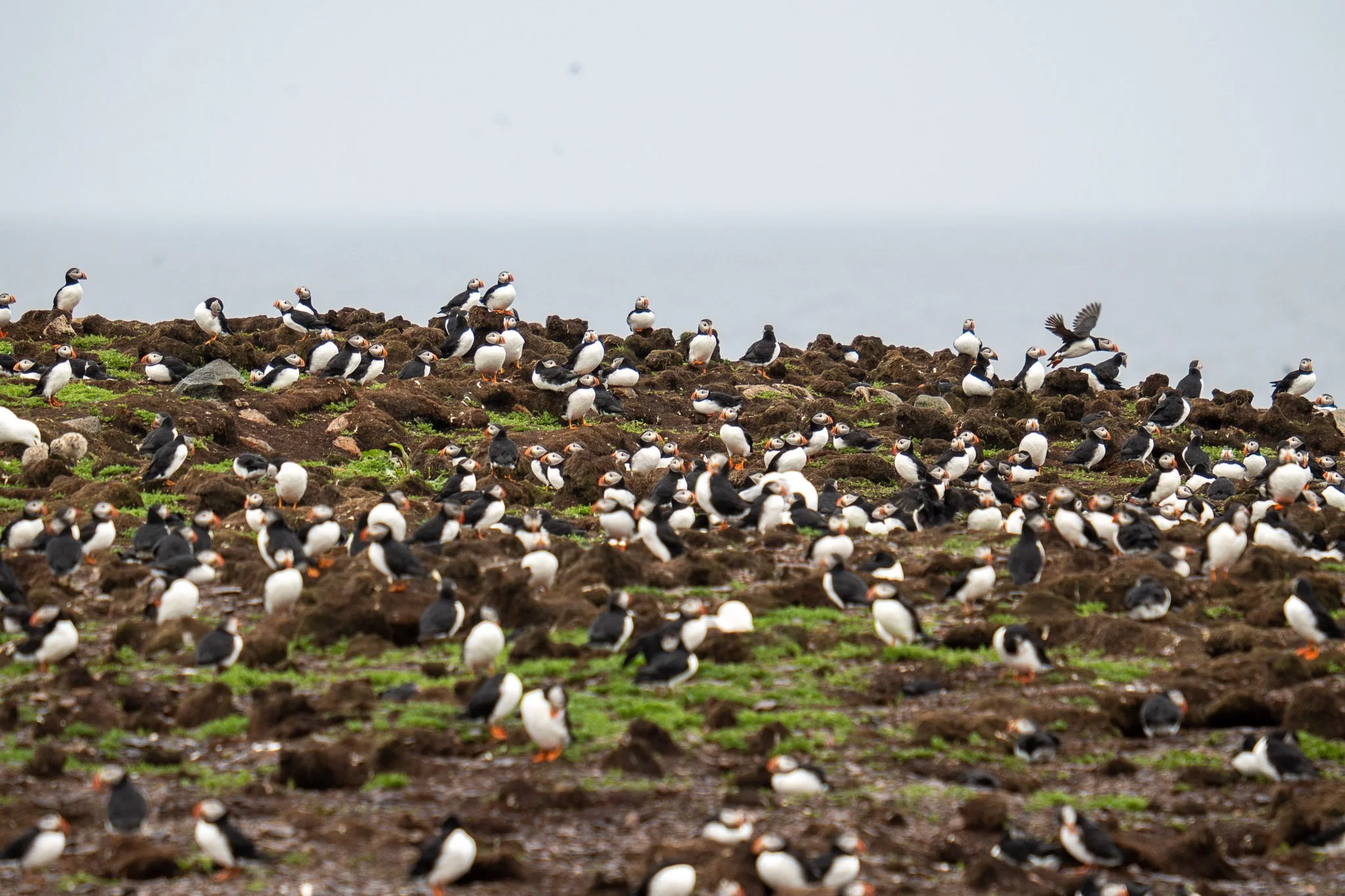
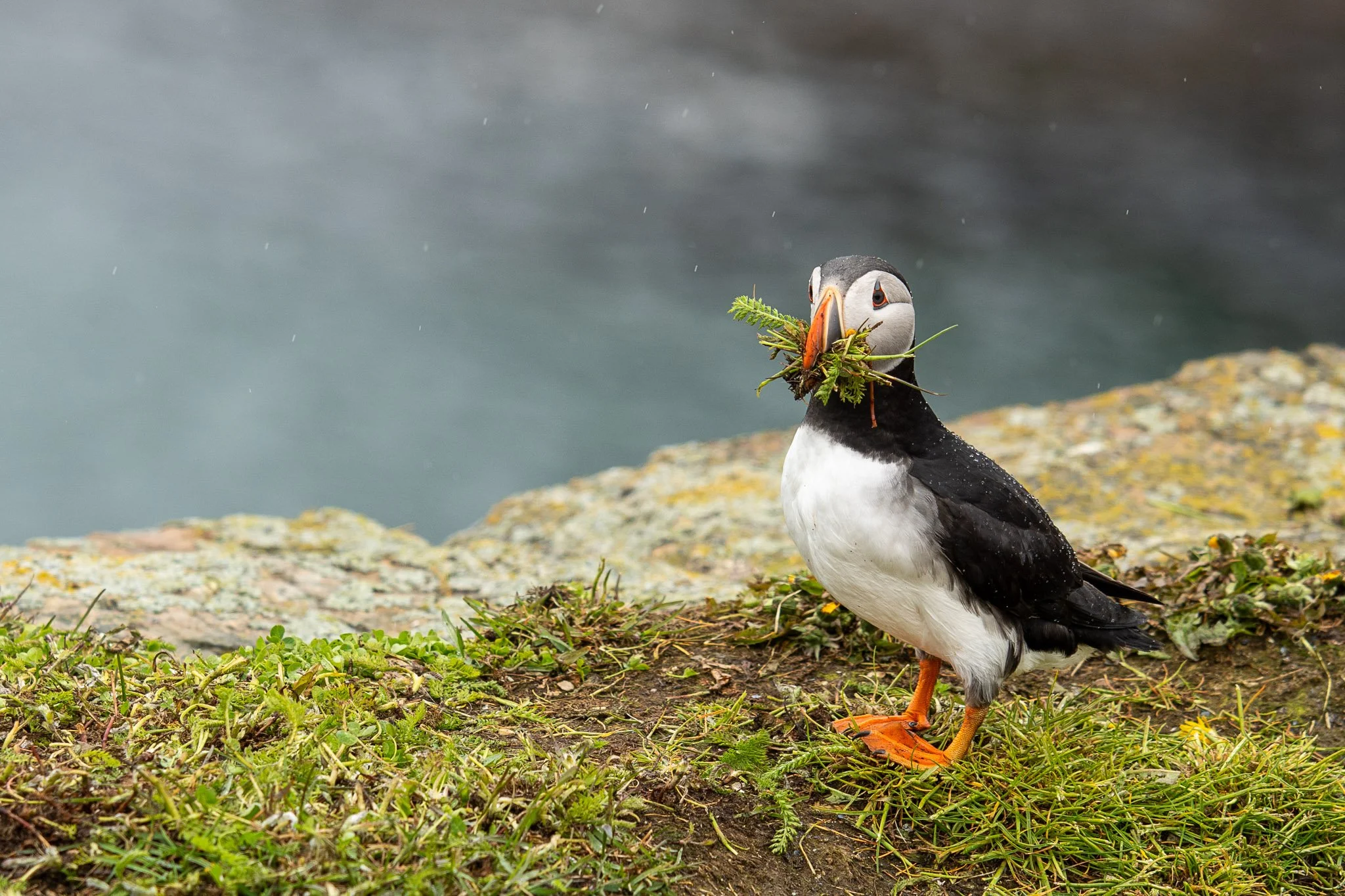
Then came the puffins, and this is the stop I tell everyone about. Out on the Bonavista Peninsula, near the town of Elliston, is what's known as the closest puffin viewing site to the public in the world. No boat. No tour. No gate. You park, walk out to the edge of a grassy headland, and the puffins are right there, a few feet away.
I didn't really even know puffins lived in North America until I was standing in the middle of them. Most people picture Iceland or Scotland, but Atlantic puffins nest all along this coast in summer. They spend most of the year out at sea and only come to land to breed, digging burrows into the cliffside grass to raise a single chick. They are also some of the funniest animals I've ever watched. They waddle, they crash-land, they stand around looking permanently annoyed, and they'll wander right up to you while you sit still. Rowan and I could have stayed all day. I loved them so much that a few days later, in St. John's, I walked into a tattoo shop and got one inked on my leg. So that happened. No regrets.
The Dildo Sign
Dildo
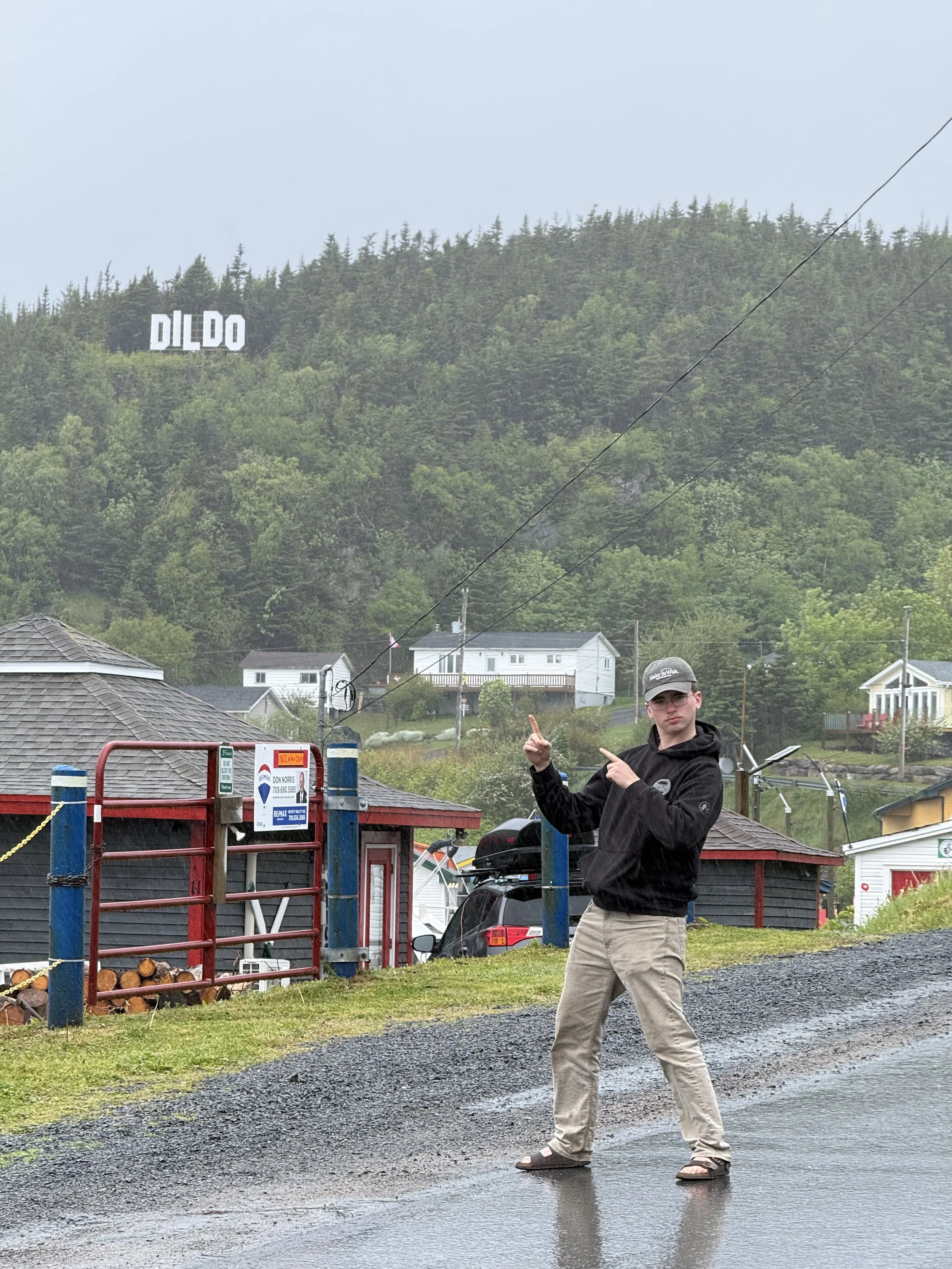
Yes, it's a real town. Yes, that's really the name. And we loved it. We could not stop laughing the entire time we were there. We hit Nan's and Pop's Dildo souvenir shop and the Dildo Brewing Company, and the whole place leans into the name with exactly the right amount of self-awareness.
There's a real story behind it, too. Back in 2019, late-night host Jimmy Kimmel got obsessed with the town, ran a week long bit campaigning to be its mayor, used the Dildo Brewing Company as his "campaign headquarters," and was eventually named honorary mayor. He even had a Hollywood-style "DILDO" sign put up on the hill over the cove. So when you're standing there reading the brewery wall, you're standing in a place that briefly became a running joke on American TV, and the town clearly enjoys every second of it. It's one of the most genuinely fun stops on the island.
St. John's
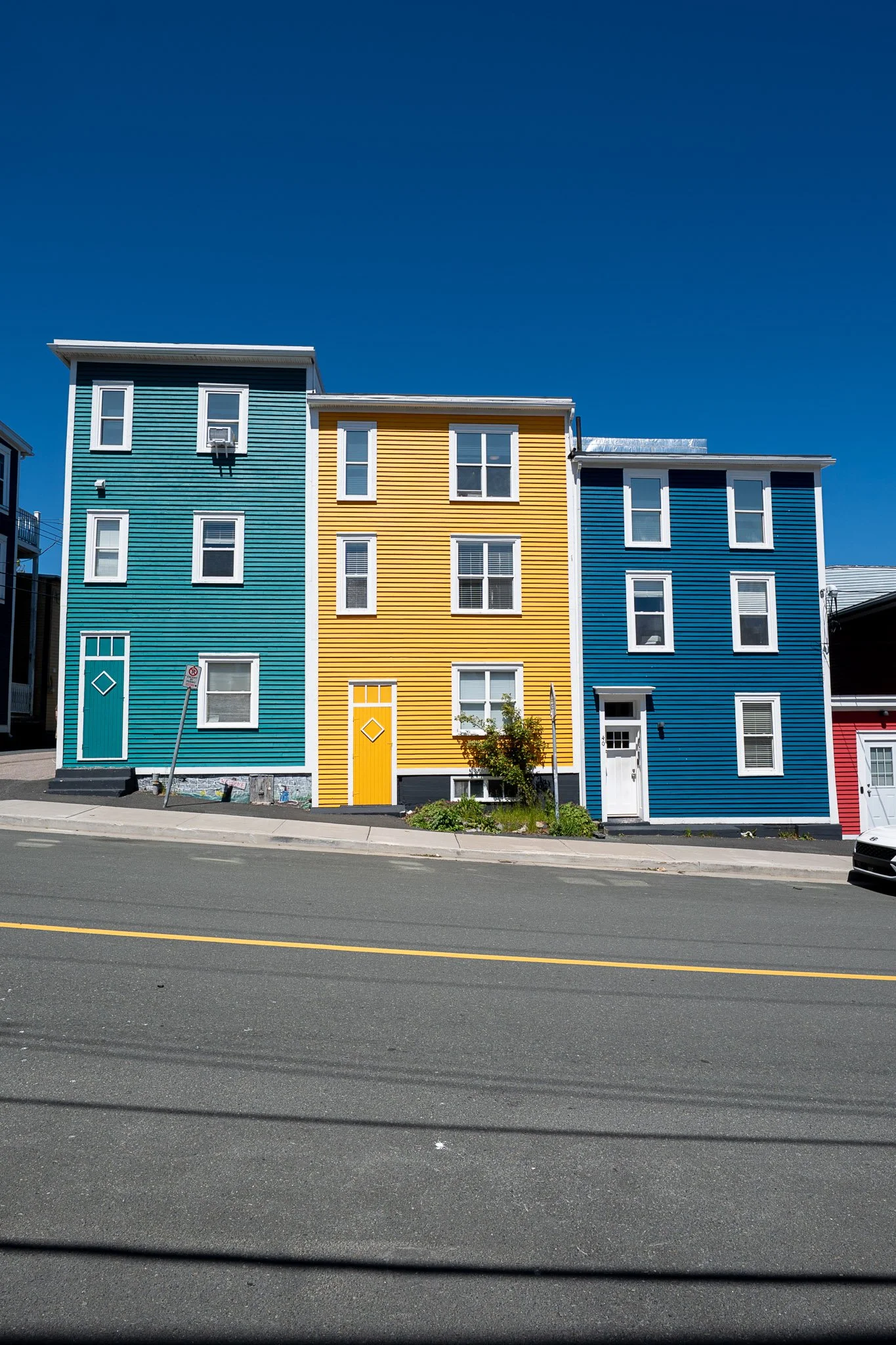
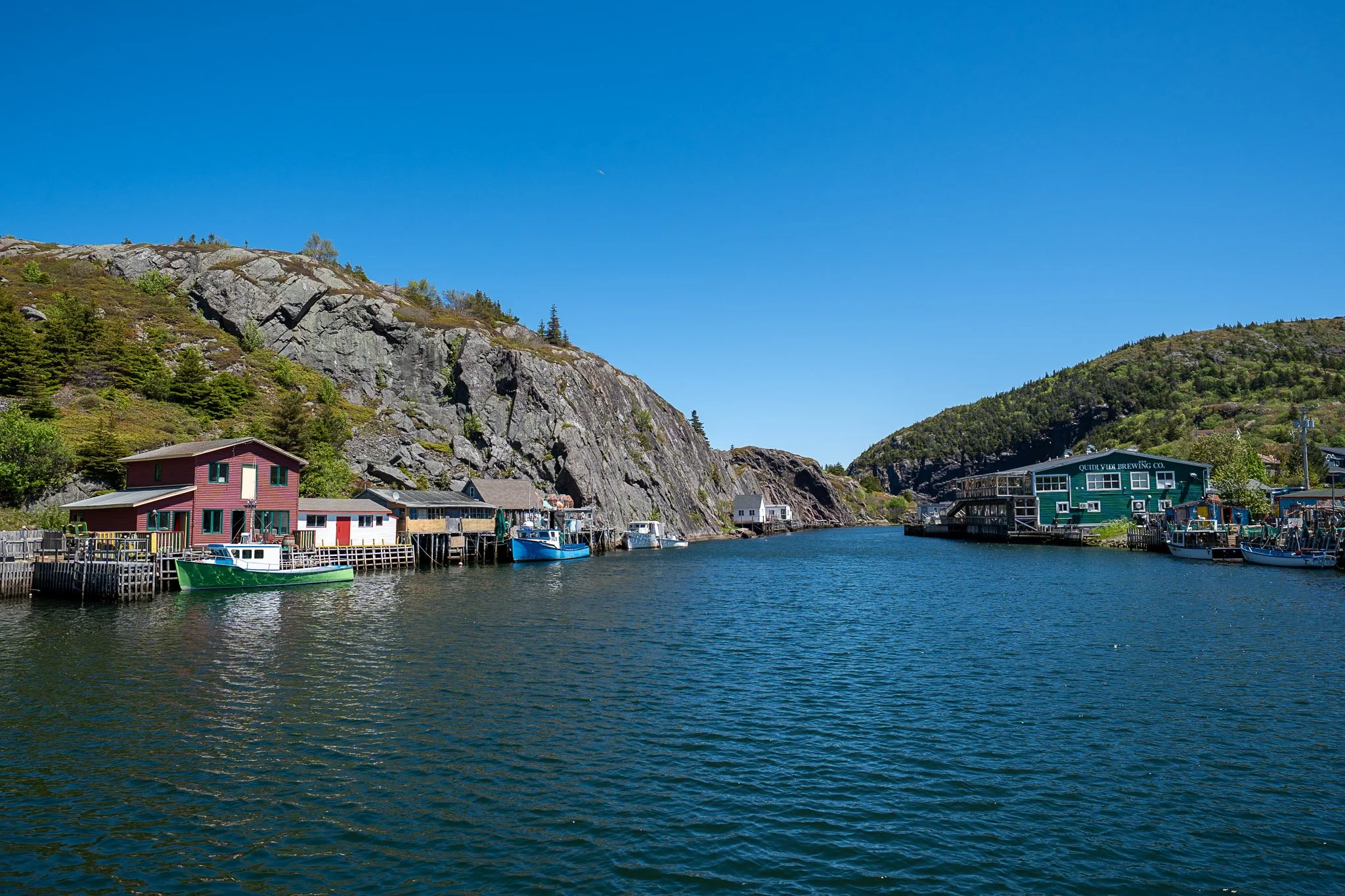
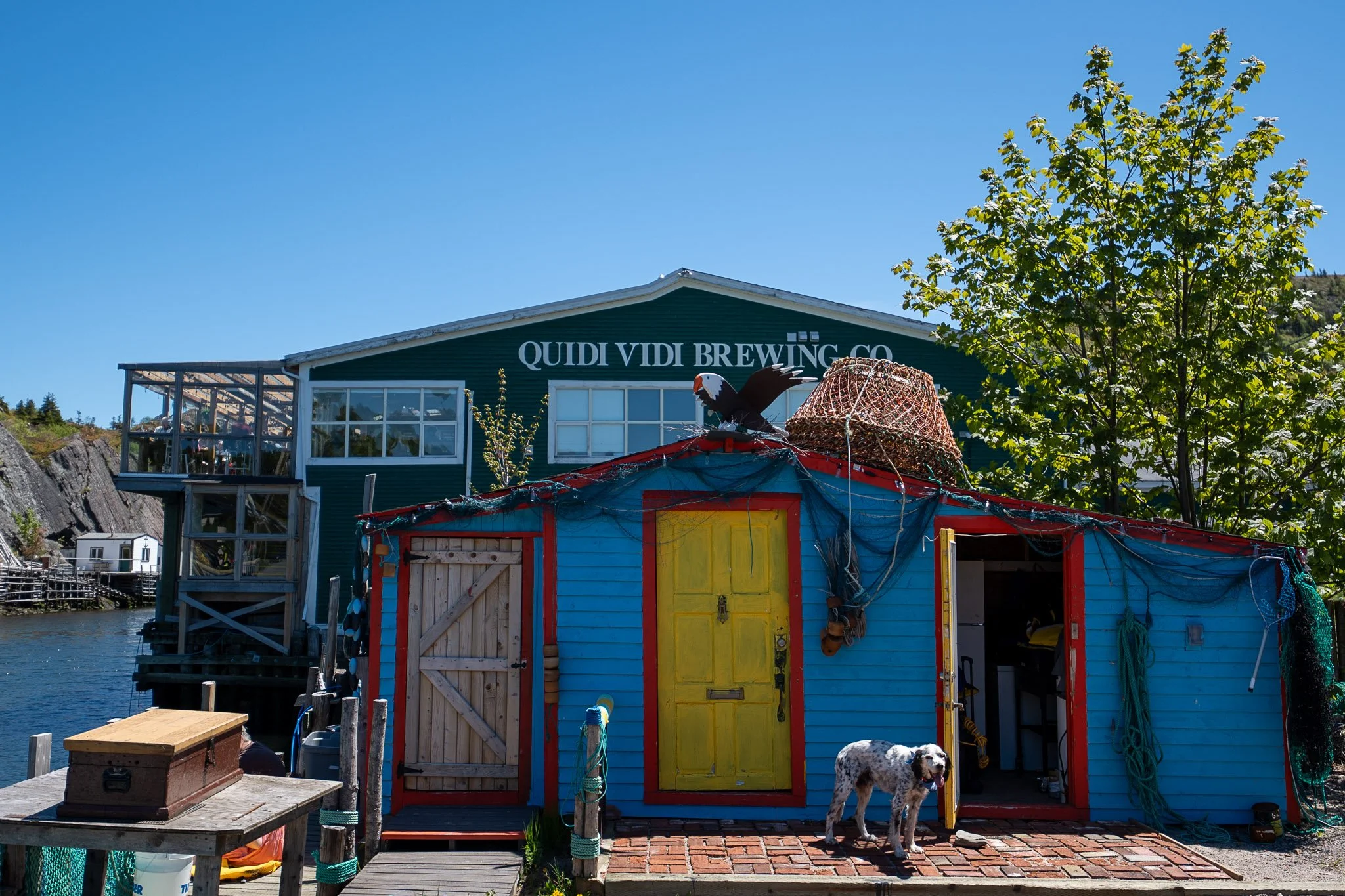
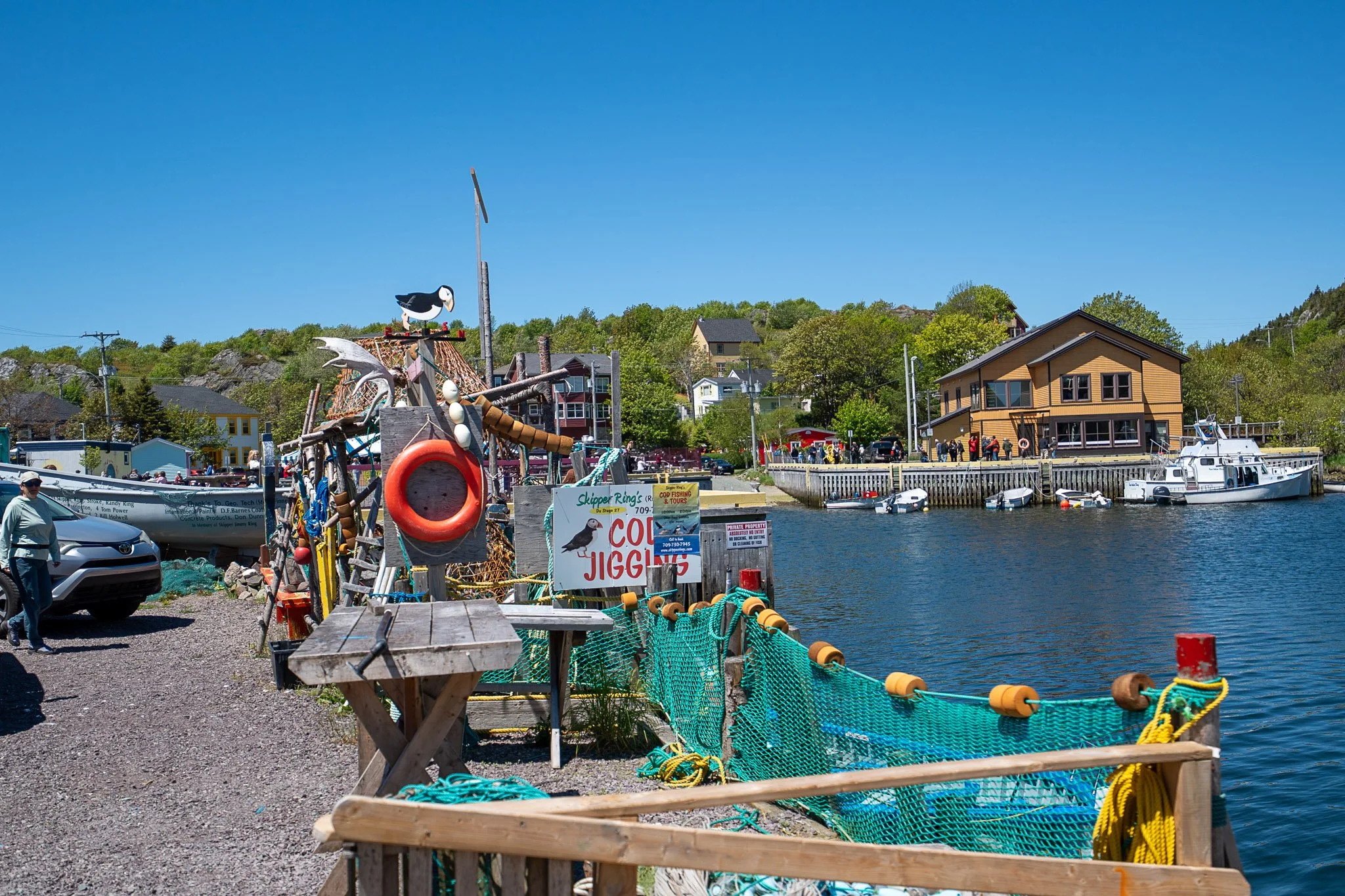
We rolled into St. John's, the easternmost city in North America, with its hills of brightly painted row houses stacked above the harbor. We hiked Signal Hill for the views over the Narrows and the open Atlantic, shot the Jelly Bean Row houses on Gower Street, where every house is a different color, and spent time in Quidi Vidi, a tiny fishing village tucked right inside the city with a brewery on the water. That's where we got screeched in. If you know, you know, and if you don't, you'll have to go find out, because explaining it ruins it. It involves kissing a cod, and you must be of drinking age…
We also did a night out on George Street, the famous bar strip, which is exactly as fun as everyone says. And the city is where the kindness thing peaked. We didn't have a room our first night and ended up crashing on a bartender's couch, which is about the most St. John's way to spend a night I can imagine. We had the Airbnb the next night, but honestly the couch was the better story. Everyone on this island wants to talk to you, point you somewhere good, and somehow get you fed. I've traveled a lot and I have never been somewhere this openly friendly.
Cape Spear: the edge of the continent
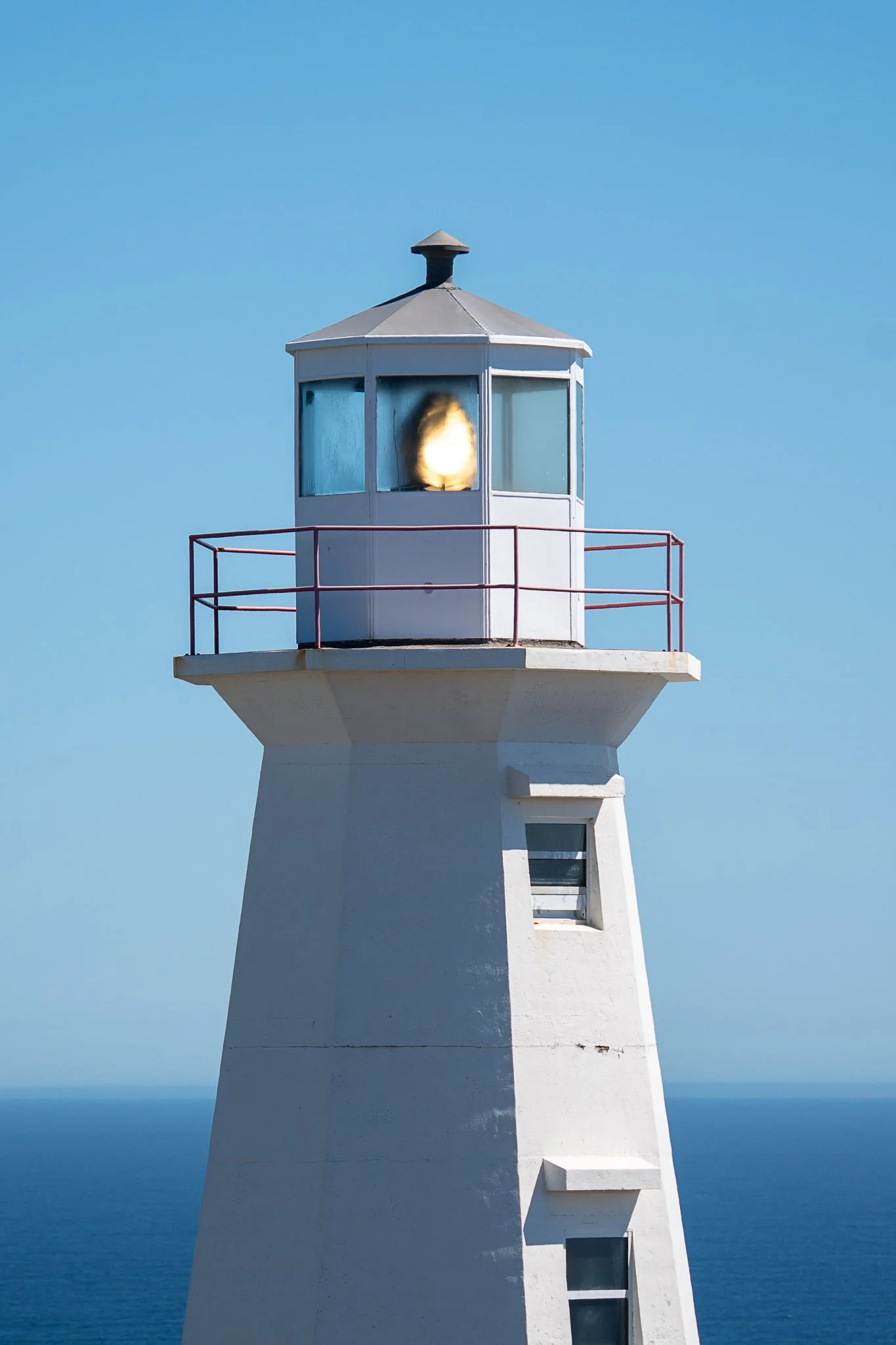
Just outside St. John's is Cape Spear, the easternmost point of North America. Stand at the point looking out and there is nothing between you and Ireland but open ocean. The next landfall east is across the entire Atlantic. We'd planned to camp at the point and shoot the sunrise, but it was cloudy and we were wrecked, so we skipped the early start and just went out to stand at the edge of the continent for a while. Sometimes that's the trip. There's an old lighthouse here and gun batteries left over from World War II, when the cape guarded the harbor, but the real reason to come is just to feel how far out you are.
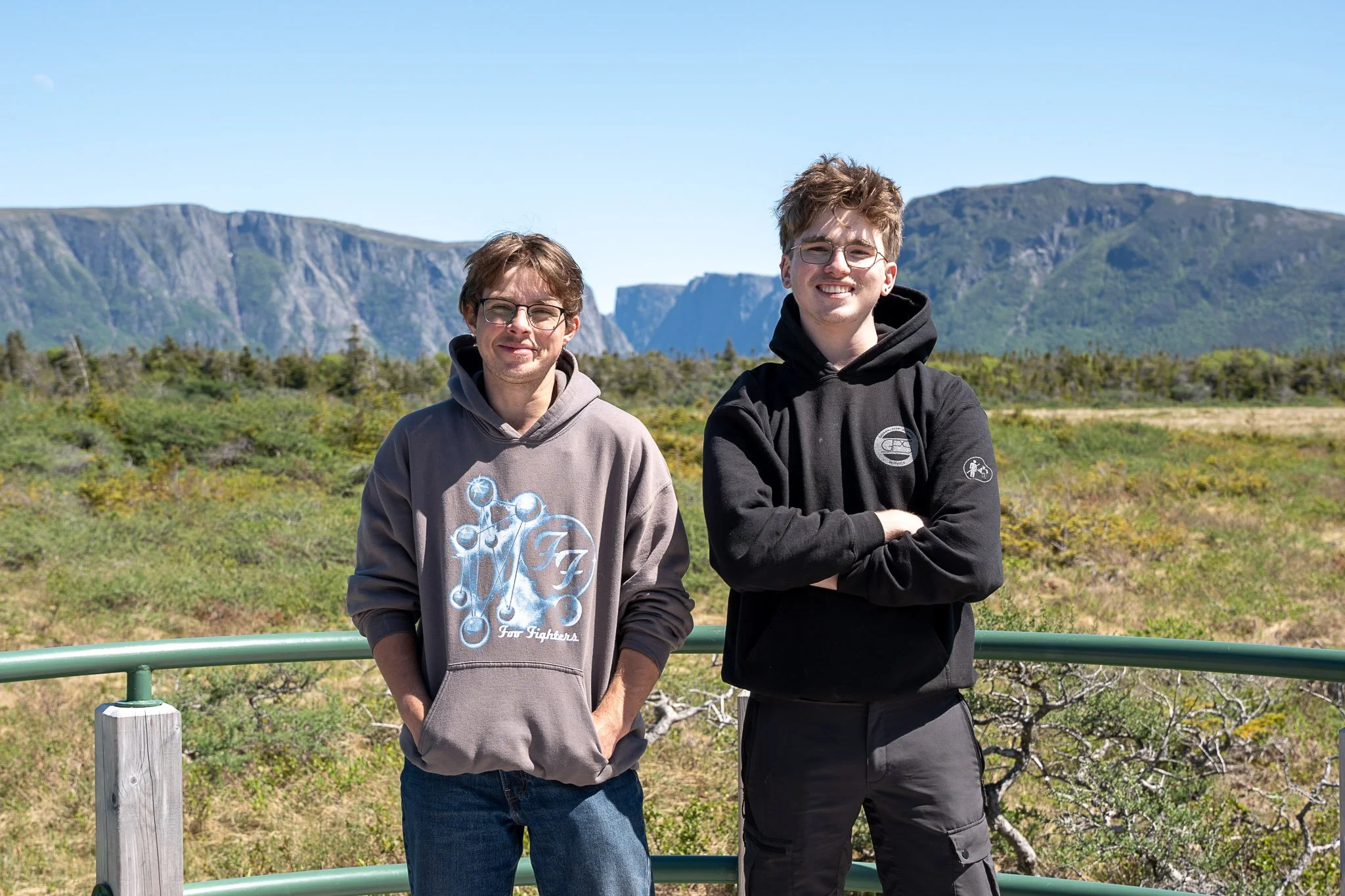
Here's the thing nobody warns you about Newfoundland: the place will ruin other trips for you a little. I've travelled to more than 40 countries, and most of the famous spots come with a catch. You fight a crowd for the photo, you pay to get near the thing, you share the view with three hundred other people doing the same. Newfoundland just hands it to you. We had icebergs to ourselves. We had a cliff full of puffins to ourselves. We stood at the easternmost edge of the continent and there was nobody else around. You don't realize how rare that is until you've spent years chasing it everywhere else.
And then there are the people, who somehow keep one-upping the scenery. Over ten days a park ranger treated us like family, we conversed our way onto a full tour boat, a bartender we'd known for a few hours handed us his couch, and a room full of strangers pulled us into a tradition. Every single person wanted to talk to us. Not in a fake way. In a "where are you from, here's where you should go next, come sit down" way. I went up there for the icebergs and the puffins. I think about the people just as much.
I shot most of it on my Sony, and the images from this trip are some of my favorite work I've made. I'll be releasing prints from it on my site at andersonrowephotography.com if you want one on your wall.
If you've been looking for somewhere real, somewhere that isn't already photographed to death, go to Newfoundland. Go in June for the icebergs. Bring a jacket for the fog and a t-shirt for the sun, because you'll get both. Bring more bug spray than you think. And get ready for the drive. It's worth every mile, even if you never do see a moose.